03 — ARTWORK
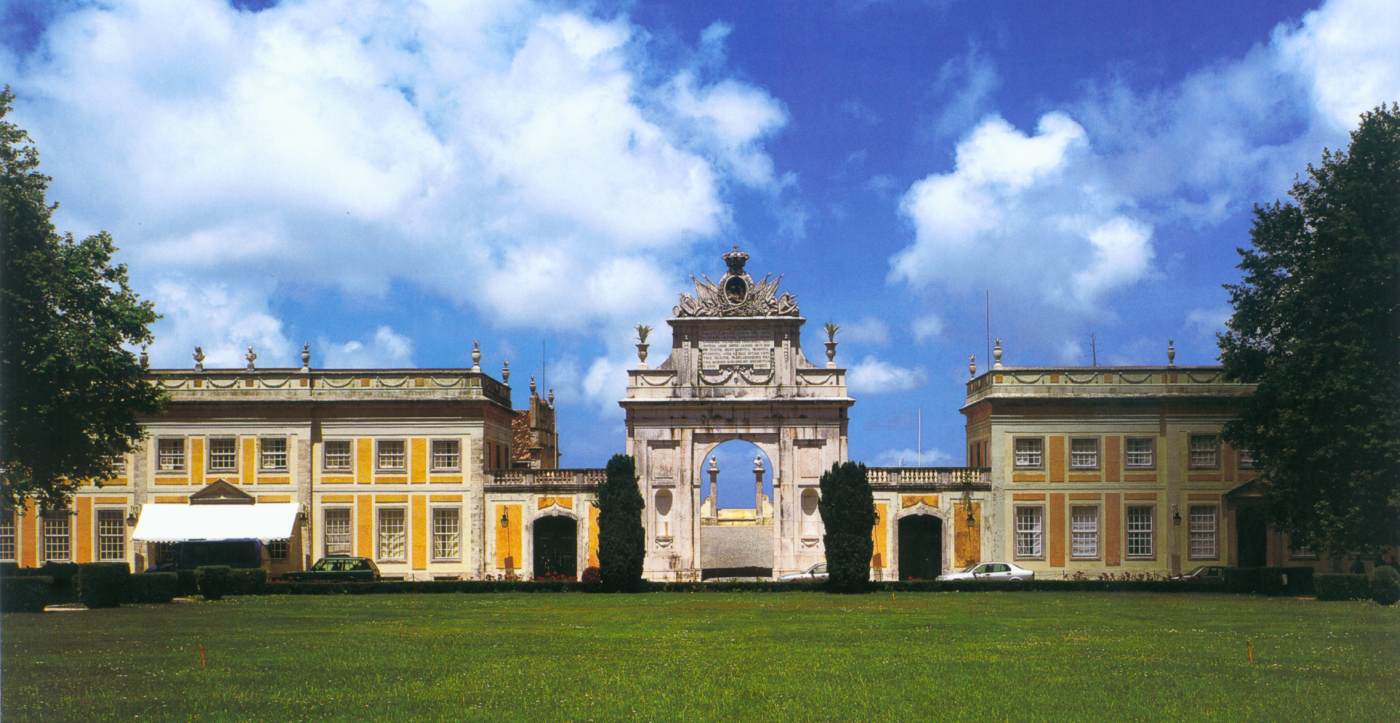
Exterior view
- MEDIUM
- Photo
- TYPE
- Other
PALETTE
HOVER OR TAP A SWATCH FOR NAME, SHARE AND HEX. SAMPLED FROM THE IMAGE — INDICATIVE, NOT A PIGMENT ANALYSIS.
DEVELOPMENT BUILD — NOT FOR PUBLIC USE. CONTRIBUTE ON GITHUB.
03 — ARTWORK
PALETTE
HOVER OR TAP A SWATCH FOR NAME, SHARE AND HEX. SAMPLED FROM THE IMAGE — INDICATIVE, NOT A PIGMENT ANALYSIS.
COMMENTARY
UNDERLINED TERMS ARE DEFINED IN THE GLOSSARY.
Most of the monuments of the idyllic town of Sintra either date back to the 15th and 16th centuries or can be seen as part of the historicising movements of the second half of the 20th century. Nevertheless, the rediscovery of this town belongs to the Neoclassical period. The densely forested Atlantic coastline had enchanted both the Romans and the Moors, and ultimately the Portuguese kings proceeded to build their summer residences here. In the 19th century the area became a destination for English and German travelers, looking for the spirit of RomanticismA term loosely applied to literary and artistic movements of the late 18th and 19th centuries. Resulting in part from the libertarian and egalitarian ideals of the French Revolution, the romantic movements had in common only a revolt against the prescribed rules of classicism. The basic aims of romanticism were various: a return to nature and to belief in the goodness of humanity; the rediscovery of the artist as a supremely individual creator; the development of nationalistic pride; and the exaltation of the senses and emotions over reason and intellect. In addition, romanticism was a philosophical revolt against rationalism., and they discovered in Sintra living traces of Portugal's diverse culture.
NeoclassicismA style in European art and architecture from the mid 18th century until the end of the 19th century. Based as it was on the use of ancient Greek and Roman models and motifs, its development was greatly influenced by the excavations at Pompeii and Herculaneum, and by the theories of the German art historian Johann Joachim Winckelmann (1717-1768). Intellectually and politically it was closely linked to the Enlightenment's rejection of the aristocratic frivolity of Rococo, the style of the Ancien Régime. Among Neoclassicism's leading figures were the French painter Jacques-Louis David (1744-1825), the German painter Anton Raffael Mengs (1728-1729), and the Italian sculptor Antonio Canova (1757-1822). had only a minor influence in Sintra, though wealthy merchants built their villas here. The largest of these is the Palácio dos Séteais, begun in 1787. The owner of this palace, which features clearly demarcated buildings and a central triumphal archIn the architecture of ancient Rome, a large and usually free-standing ceremonial archway built to celebrate a military victory. Often decorated with architectural features and relief sculptures, they usually consisted of a large archway flanked by two smaller ones. The triumphal archway was revived during the Renaissance, though usually as a feature of a building rather than as an independent structure. In Renaissance painting they appear as allusion to classical antiquity., was a Dutch diamond merchant, who was also consul.
@online{wga-r234d269ad72b6f,
  author       = {Krén, Emil and Marx, Daniel},
  title        = {Exterior view by COSTA E SILVA, José da},
  organization = {{Web Gallery of Art}},
  date         = {2026-09-13},
  url          = {https://beta.wga.hu/artists/costa-e-silva-jos-da-rdf948abae04c5f/exterior-view-r234d269ad72b6f},
  urldate      = {2026-09-13},
  langid       = {english}
}
ACCESSED 2026-09-13. REPLACE THE AUTHOR FIELD WITH THE COMMENTARY AUTHOR WHERE ONE IS NAMED.
The archive catalogues no further works by this artist.
TRY SAME COLLECTION →
