03 — ARTWORK
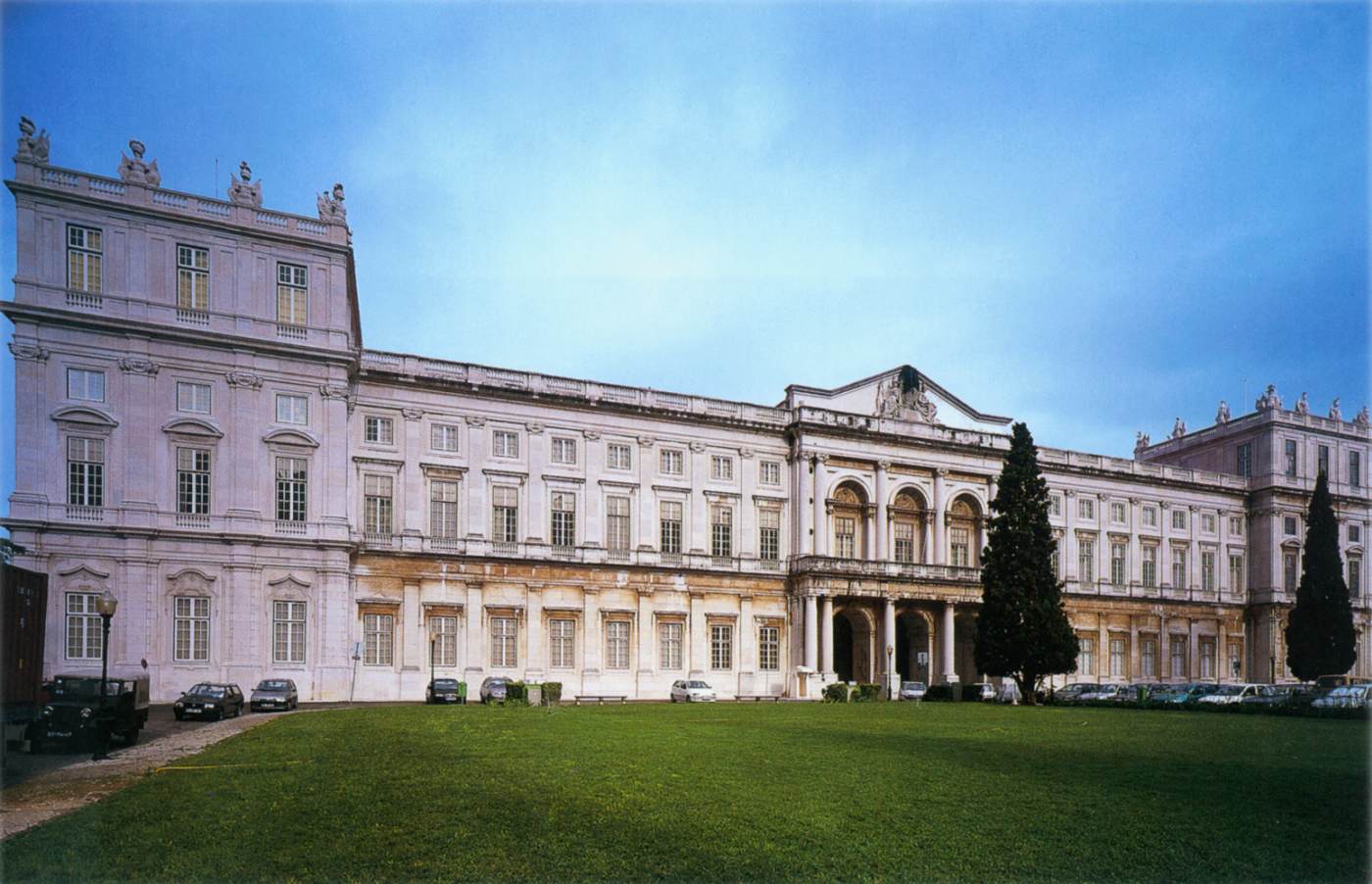
Exterior view
COSTA E SILVA, José da · 1835 →
- MEDIUM
- Photo
- TYPE
- Other
PALETTE
HOVER OR TAP A SWATCH FOR NAME, SHARE AND HEX. SAMPLED FROM THE IMAGE — INDICATIVE, NOT A PIGMENT ANALYSIS.
DEVELOPMENT BUILD — NOT FOR PUBLIC USE. CONTRIBUTE ON GITHUB.
03 — ARTWORK
COSTA E SILVA, José da · 1835 →
PALETTE
HOVER OR TAP A SWATCH FOR NAME, SHARE AND HEX. SAMPLED FROM THE IMAGE — INDICATIVE, NOT A PIGMENT ANALYSIS.
COMMENTARY
UNDERLINED TERMS ARE DEFINED IN THE GLOSSARY.
The Teatro de São Carlos in Lisbon signaled the arrival of NeoclassicismA style in European art and architecture from the mid 18th century until the end of the 19th century. Based as it was on the use of ancient Greek and Roman models and motifs, its development was greatly influenced by the excavations at Pompeii and Herculaneum, and by the theories of the German art historian Johann Joachim Winckelmann (1717-1768). Intellectually and politically it was closely linked to the Enlightenment's rejection of the aristocratic frivolity of Rococo, the style of the Ancien Régime. Among Neoclassicism's leading figures were the French painter Jacques-Louis David (1744-1825), the German painter Anton Raffael Mengs (1728-1729), and the Italian sculptor Antonio Canova (1757-1822). as the legitimate architectural style for buildings representing the interests of the middle classes. Court architecture, on the other hand, found it difficult to shake off entirely the influence of BaroqueThe period in art history from about 1600 to about 1750. In this sense the term covers a wide range of styles and artists. In painting and sculpture there were three main forms of Baroque: (1) sumptuous display, a style associated with the Catholic Counter Reformation and the absolutist courts of Europe (Bernini, Rubens); (2) dramatic realism (Caravaggio); and (3) everyday realism, a development seen in particular in Holland (Rembrandt, Vermeer). In architecture, there was an emphasis on expressiveness and grandeur, achieved through scale, the dramatic use of light and shadow, and increasingly elaborate decoration. In a more limited sense the term Baroque often refers to the first of these categories. The development of the Baroque reflects the period's religious tensions (Catholic versus Protestant); a new and more expansive world view based on science and exploration; and the growth of absolutist monarchies.. An example was provided by the laying of the foundation in 1802 for the new Palácio da Ajuda, which had been destroyed by fire. The residence was begun from plans by Francisco Xavier Fabri (1761-1807) and José da Costa e Silva. Napoleon's invasion, however, prevented work from progressing, and it was finished only in 1835.
@online{wga-r3eda0ae5193e42,
  author       = {Krén, Emil and Marx, Daniel},
  title        = {Exterior view by COSTA E SILVA, José da},
  organization = {{Web Gallery of Art}},
  date         = {2026-09-13},
  url          = {https://beta.wga.hu/artists/costa-e-silva-jos-da-rdf948abae04c5f/exterior-view-r3eda0ae5193e42},
  urldate      = {2026-09-13},
  langid       = {english}
}
ACCESSED 2026-09-13. REPLACE THE AUTHOR FIELD WITH THE COMMENTARY AUTHOR WHERE ONE IS NAMED.
The archive catalogues no further works by this artist.
TRY SAME COLLECTION →
