03 — ARTWORK
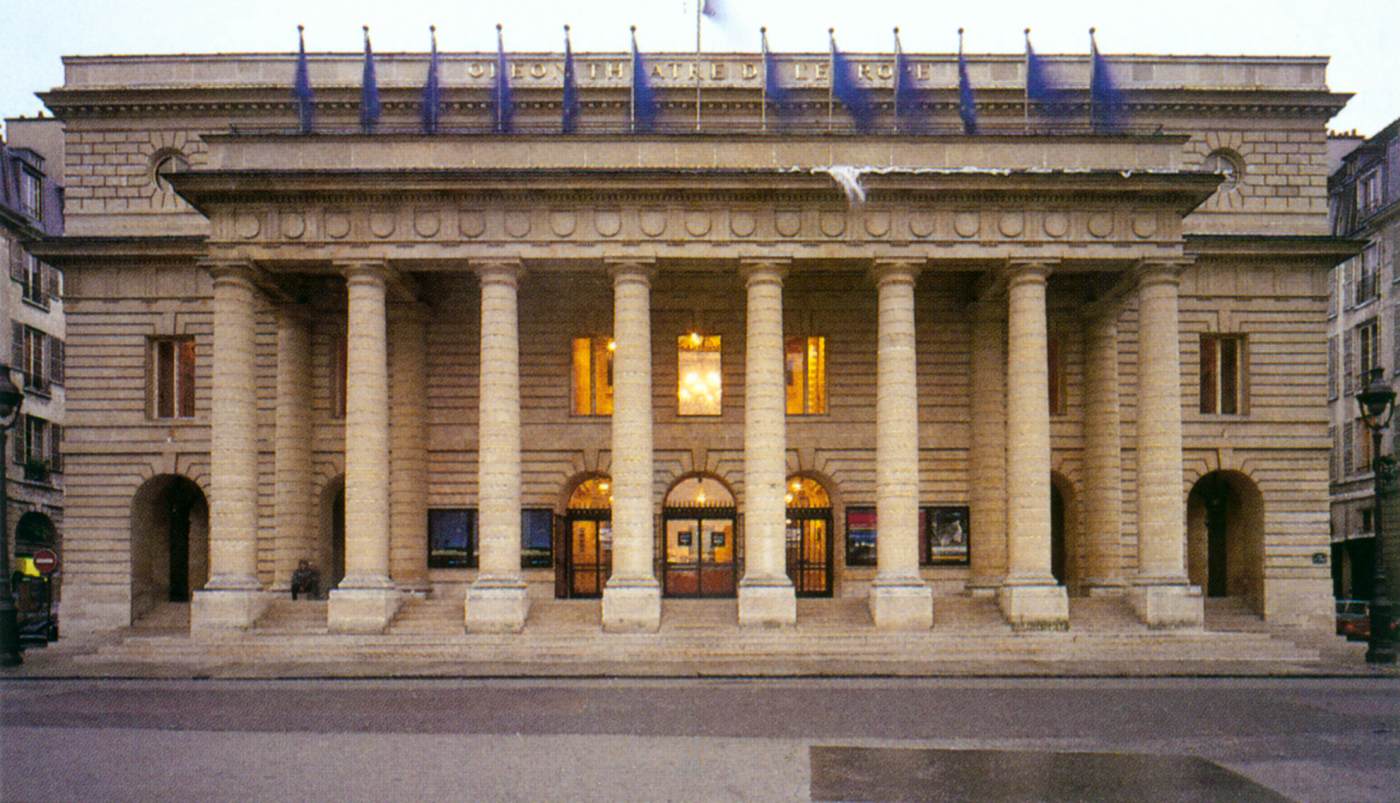
Entrance façade
- MEDIUM
- Photo
- TYPE
- Other
PALETTE
HOVER OR TAP A SWATCH FOR NAME, SHARE AND HEX. SAMPLED FROM THE IMAGE — INDICATIVE, NOT A PIGMENT ANALYSIS.
DEVELOPMENT BUILD — NOT FOR PUBLIC USE. CONTRIBUTE ON GITHUB.
03 — ARTWORK
PALETTE
HOVER OR TAP A SWATCH FOR NAME, SHARE AND HEX. SAMPLED FROM THE IMAGE — INDICATIVE, NOT A PIGMENT ANALYSIS.
COMMENTARY
UNDERLINED TERMS ARE DEFINED IN THE GLOSSARY.
From the 1740s, enormous influence was wielded on the development of French secular architecture by the "Roman scholars." They constituted a counterweight to the formal grammar of Ange-Jacques Gabriel and Jacques-Denis Antoine based on the tradition of French classicism and pre-classicism. They were all "pensionnaires" at the French Academy in Rome during the decade of the 1750s intensively studying the buildings of Antiquity, but also looking at the works of Michelangelo and Bernini. They translated the buildings they admired in Italy not into engravings or temporary decoration, but into workable architectural designs. When they returned to France, the ex-scholars popularised the "style grec", an imaginative and successful mixture of features derived from Antiquity, the Renaissance, and the BaroqueThe period in art history from about 1600 to about 1750. In this sense the term covers a wide range of styles and artists. In painting and sculpture there were three main forms of Baroque: (1) sumptuous display, a style associated with the Catholic Counter Reformation and the absolutist courts of Europe (Bernini, Rubens); (2) dramatic realism (Caravaggio); and (3) everyday realism, a development seen in particular in Holland (Rembrandt, Vermeer). In architecture, there was an emphasis on expressiveness and grandeur, achieved through scale, the dramatic use of light and shadow, and increasingly elaborate decoration. In a more limited sense the term Baroque often refers to the first of these categories. The development of the Baroque reflects the period's religious tensions (Catholic versus Protestant); a new and more expansive world view based on science and exploration; and the growth of absolutist monarchies., thus preparing the way for NeoclassicismA style in European art and architecture from the mid 18th century until the end of the 19th century. Based as it was on the use of ancient Greek and Roman models and motifs, its development was greatly influenced by the excavations at Pompeii and Herculaneum, and by the theories of the German art historian Johann Joachim Winckelmann (1717-1768). Intellectually and politically it was closely linked to the Enlightenment's rejection of the aristocratic frivolity of Rococo, the style of the Ancien Régime. Among Neoclassicism's leading figures were the French painter Jacques-Louis David (1744-1825), the German painter Anton Raffael Mengs (1728-1729), and the Italian sculptor Antonio Canova (1757-1822).. Their buildings began to appear in France form the late 1750s until well into the 1780s. Marie-Joseph Peyre, Charles de Wailly and Pierre-Louis Moreau-Desproux belonged to this group.
One of the most demanding projects by this younger generation of architects in Paris was the construction of the Comédie Française, now the Théâtre de l'Odéon. The first plan for this were submitted in 1769 by Marie-Joseph Peyre and Charles de Wailly. After initially experimenting with a circular auditorium, the auditorium was lengthened into an oval and clad in a rectangular exterior. With its taut rusticationrusticated ashlar, masonry with a rough surface finish;, the front section projects and the stone block's edges are given a narrow straight edge to make it easier to move into position. and porticoUsually open porch supported by columns or pillars on the main entrance side of a buildings. Frequently supports a pediment. of Tuscan columns beneath a tall attic - a novel, horizontally terminated but monumental type of portico - Peyre's broad façadethe front or principal face of a building, especially one elaborately constructed; a blind façade is a façade that is purely decorative and does not relate to the structure of the building. reveals a strictly architectural conception. In contrast, the (now altered) interior with its splendid furnishings bore witness to the rich decorative and theatrical imagination of de Wailly.
The archive catalogues no further works by this artist.
TRY SAME COLLECTION →@online{wga-r61cf9053df6db3,
author = {Krén, Emil and Marx, Daniel},
title = {Entrance façade by PEYRE, Marie-Joseph},
organization = {{Web Gallery of Art}},
date = {2026-09-14},
url = {https://beta.wga.hu/artists/peyre-marie-joseph-r01ed89d2920871/entrance-faade-r61cf9053df6db3},
urldate = {2026-09-14},
langid = {english}
}ACCESSED 2026-09-14. REPLACE THE AUTHOR FIELD WITH THE COMMENTARY AUTHOR WHERE ONE IS NAMED.