03 — ARTWORK
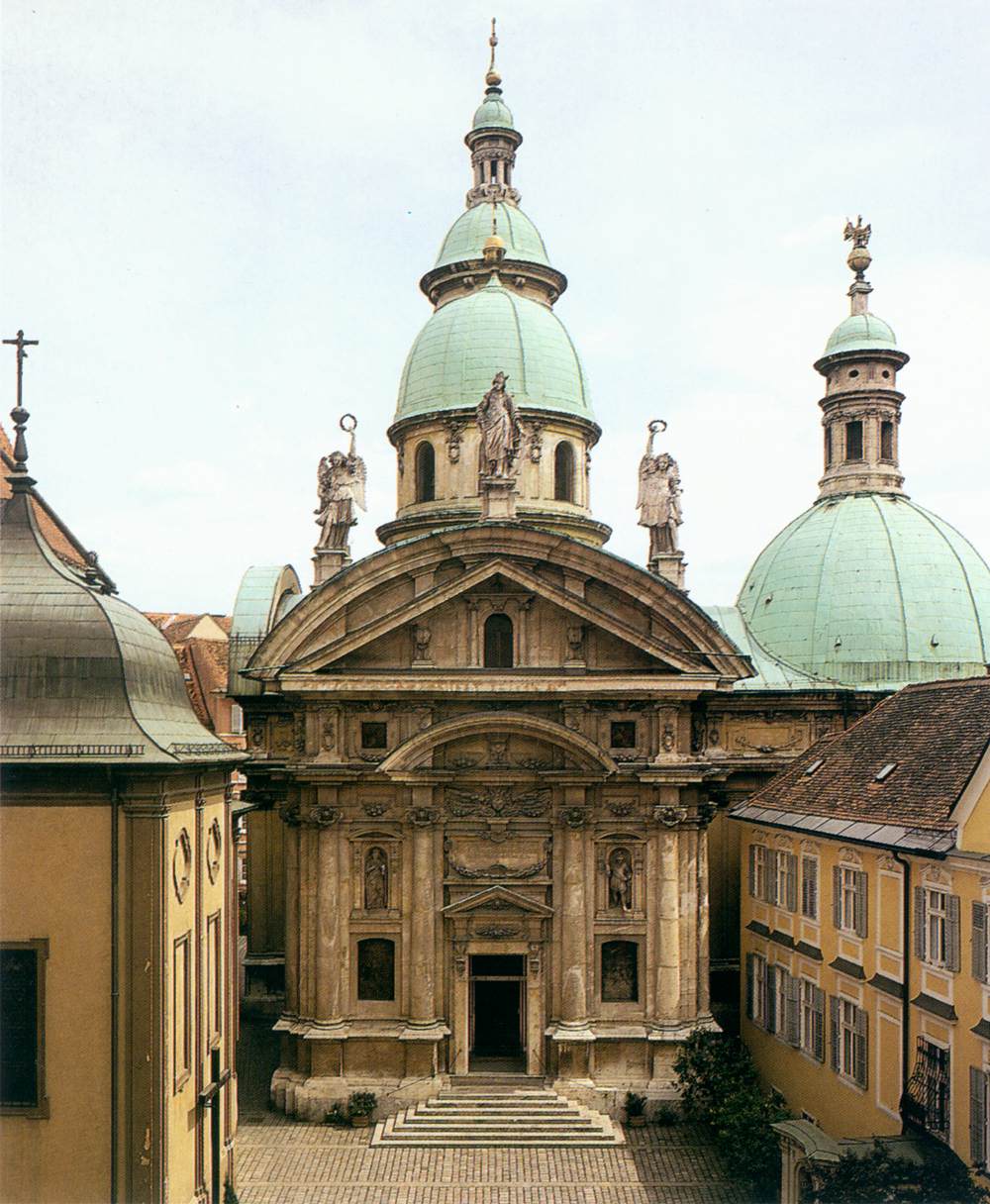
Exterior view
- MEDIUM
- Photo
- TYPE
- Other
PALETTE
HOVER OR TAP A SWATCH FOR NAME, SHARE AND HEX. SAMPLED FROM THE IMAGE — INDICATIVE, NOT A PIGMENT ANALYSIS.
DEVELOPMENT BUILD — NOT FOR PUBLIC USE. CONTRIBUTE ON GITHUB.
03 — ARTWORK
PALETTE
HOVER OR TAP A SWATCH FOR NAME, SHARE AND HEX. SAMPLED FROM THE IMAGE — INDICATIVE, NOT A PIGMENT ANALYSIS.
COMMENTARY
UNDERLINED TERMS ARE DEFINED IN THE GLOSSARY.
The Italian approach in Austrian baroqueThe period in art history from about 1600 to about 1750. In this sense the term covers a wide range of styles and artists. In painting and sculpture there were three main forms of Baroque: (1) sumptuous display, a style associated with the Catholic Counter Reformation and the absolutist courts of Europe (Bernini, Rubens); (2) dramatic realism (Caravaggio); and (3) everyday realism, a development seen in particular in Holland (Rembrandt, Vermeer). In architecture, there was an emphasis on expressiveness and grandeur, achieved through scale, the dramatic use of light and shadow, and increasingly elaborate decoration. In a more limited sense the term Baroque often refers to the first of these categories. The development of the Baroque reflects the period's religious tensions (Catholic versus Protestant); a new and more expansive world view based on science and exploration; and the growth of absolutist monarchies. architecture is most clearly reflected in the mausoleum of Ferdinand II in Graz. Before his accession as archduke of Styria, he was an emphatic advocate of the Counter-ReformationTerm in ecclesiastical history referring to the reform of the entire Church which was widely believed to be necessary as early as the late Middle Ages. Reform programs, such as those passed by the Councils of Constance (1414-1418) and Basle (1431-1437 and 1448) or the 5th Lateran Council (1512-1517), did not achieve any lasting results. Not until the Protestant Reformation were the Pope and Roman Curia forced to take specific action against abuse of position, declining moral standards, the selling of indulgences and excesses in the worship of saints and relics. With the Laetere Jerusalem (1544) bull. Pope Paul III (1534-1549) was responsible for the convocation of the Council of Trent which, in three separate sessions between 15445 and 1563, started the process of inner reform in the Church.. Ferdinand commissioned plans for the structure from the Italian architect and painter Pietro de Pomis (c. 1569-1633). Pomis was probably the first architect to make use of an oval ground plan north of the Alps for this mausoleum in St. Catherine's church. He envisaged a two-storey circular structure surmounted by an oval domein architecture, hemispherical structure evolved from the arch, usually forming a ceiling or roof., a characteristic Italian motif.
After the death of Pomis construction was suspended for half a century until Fischer von Erlach was commissioned to fit out the half-finished shell in 1687.
The photo shows the west front of the mausoleum.
@online{wga-r63544e5c291272,
  author       = {Krén, Emil and Marx, Daniel},
  title        = {Exterior view by POMIS, Pietro de},
  organization = {{Web Gallery of Art}},
  date         = {2026-09-13},
  url          = {https://beta.wga.hu/artists/pomis-pietro-de-r5006307fbebadd/exterior-view-r63544e5c291272},
  urldate      = {2026-09-13},
  langid       = {english}
}
ACCESSED 2026-09-13. REPLACE THE AUTHOR FIELD WITH THE COMMENTARY AUTHOR WHERE ONE IS NAMED.
The archive catalogues no further works by this artist.
TRY SAME COLLECTION →