03 — ARTWORK
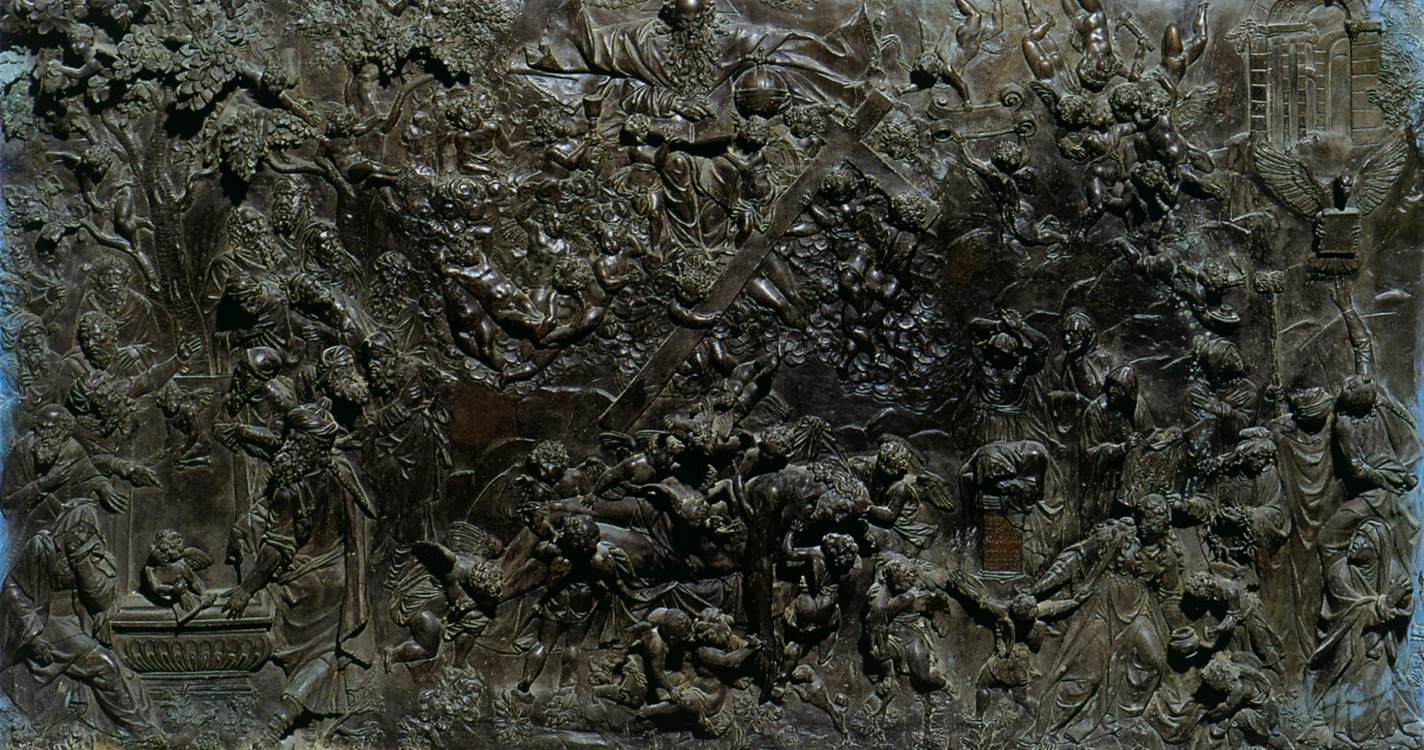
Allegory of the Redemption
ROCCATAGLIATA, Nicolò · 1633 →
- MEDIUM
- Bronze
- TYPE
- Mythological
PALETTE
HOVER OR TAP A SWATCH FOR NAME, SHARE AND HEX. SAMPLED FROM THE IMAGE — INDICATIVE, NOT A PIGMENT ANALYSIS.
DEVELOPMENT BUILD — NOT FOR PUBLIC USE. CONTRIBUTE ON GITHUB.
03 — ARTWORK
ROCCATAGLIATA, Nicolò · 1633 →
PALETTE
HOVER OR TAP A SWATCH FOR NAME, SHARE AND HEX. SAMPLED FROM THE IMAGE — INDICATIVE, NOT A PIGMENT ANALYSIS.
COMMENTARY
UNDERLINED TERMS ARE DEFINED IN THE GLOSSARY.
The bronzeAn alloy of copper (usually about 90 per cent) and tin, often also containing small amounts of other metals such as lead or zinc. Since antiquity it has been the metal most commonly used in cast sculpture because of its strength, durability, and the fact that it is easily workable - both hot and cold - by a variety of processes. It is easier to cast than copper because it has a lower melting-point, and its great tensile strength makes possible the protrusion of unsupported parts - an advantage over marble sculpture. The colour of bronze is affected by the proportion of tin or other metals present, varying from silverish to a rich, coppery red, and its surface beauty can be enhanced when it acquires a patina. canopy on the altar of the sacristya side room of a church where a priest puts on his vestments and where the sacred vessels and vestments are kept. of San Moisè was executed and signed by Niccolò Roccatagliata and his son Sebastiano. The work of this Genoese artist, a pupil of Cesare Groppo, is seen in Venice after 1594 in the production of small bronzes. The canopy, influenced by the work of Alessandro Vittoria and Girolamo Campagna, is an isolated case within Roccatagliata's own production, both for its Counter-ReformationTerm in ecclesiastical history referring to the reform of the entire Church which was widely believed to be necessary as early as the late Middle Ages. Reform programs, such as those passed by the Councils of Constance (1414-1418) and Basle (1431-1437 and 1448) or the 5th Lateran Council (1512-1517), did not achieve any lasting results. Not until the Protestant Reformation were the Pope and Roman Curia forced to take specific action against abuse of position, declining moral standards, the selling of indulgences and excesses in the worship of saints and relics. With the Laetere Jerusalem (1544) bull. Pope Paul III (1534-1549) was responsible for the convocation of the Council of Trent which, in three separate sessions between 15445 and 1563, started the process of inner reform in the Church. theme, and for the way the scene is articulated. The narrative focuses of the scene are arranged in an extremely turbulent composition.
@online{wga-rda00d089e0a2db,
  author       = {Krén, Emil and Marx, Daniel},
  title        = {Allegory of the Redemption by ROCCATAGLIATA, Nicolò},
  organization = {{Web Gallery of Art}},
  date         = {2026-09-09},
  url          = {https://beta.wga.hu/artists/roccatagliata-nicol-rd47abcd78f7898/allegory-of-the-redemption-rda00d089e0a2db},
  urldate      = {2026-09-09},
  langid       = {english}
}
ACCESSED 2026-09-09. REPLACE THE AUTHOR FIELD WITH THE COMMENTARY AUTHOR WHERE ONE IS NAMED.


