03 — ARTWORK
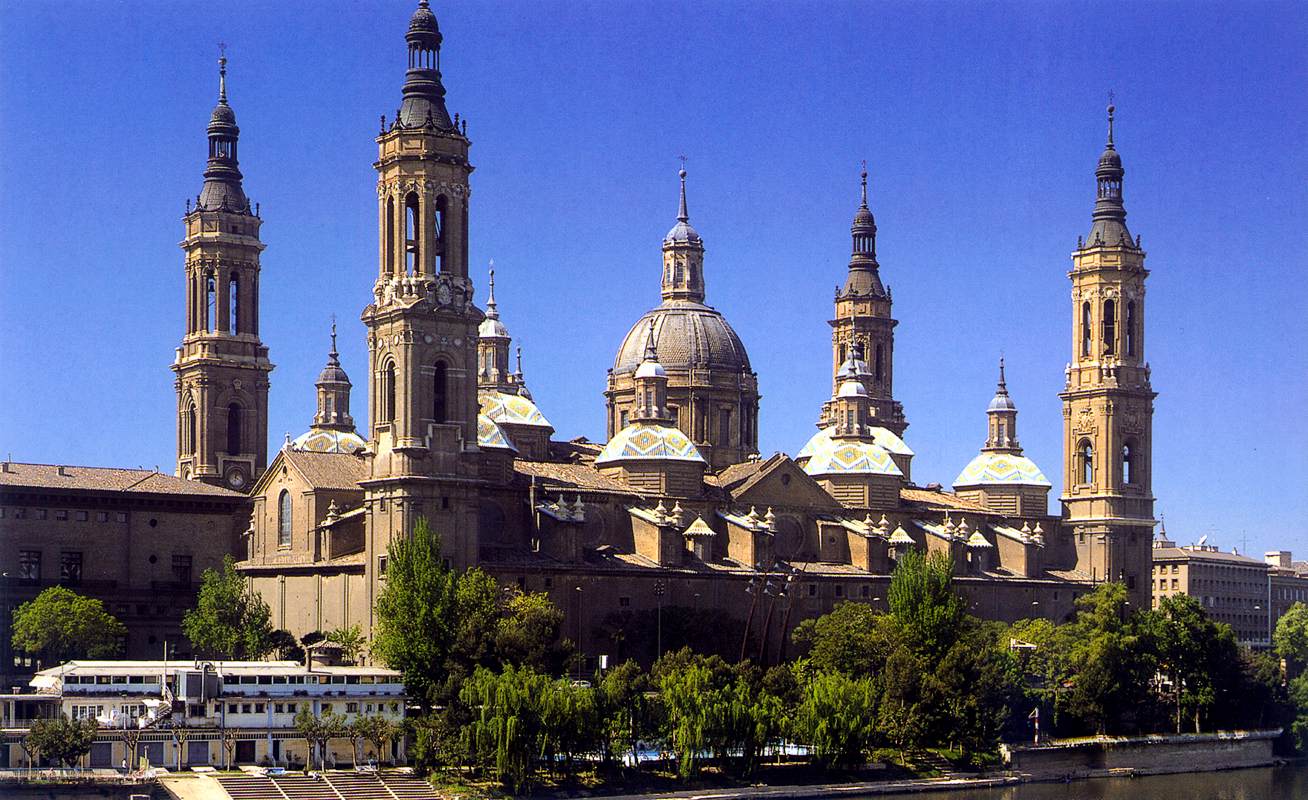
General view
- MEDIUM
- Photo
- TYPE
- Other
PALETTE
HOVER OR TAP A SWATCH FOR NAME, SHARE AND HEX. SAMPLED FROM THE IMAGE — INDICATIVE, NOT A PIGMENT ANALYSIS.
DEVELOPMENT BUILD — NOT FOR PUBLIC USE. CONTRIBUTE ON GITHUB.
03 — ARTWORK
PALETTE
HOVER OR TAP A SWATCH FOR NAME, SHARE AND HEX. SAMPLED FROM THE IMAGE — INDICATIVE, NOT A PIGMENT ANALYSIS.
COMMENTARY
UNDERLINED TERMS ARE DEFINED IN THE GLOSSARY.
The present spacious church in BaroqueThe period in art history from about 1600 to about 1750. In this sense the term covers a wide range of styles and artists. In painting and sculpture there were three main forms of Baroque: (1) sumptuous display, a style associated with the Catholic Counter Reformation and the absolutist courts of Europe (Bernini, Rubens); (2) dramatic realism (Caravaggio); and (3) everyday realism, a development seen in particular in Holland (Rembrandt, Vermeer). In architecture, there was an emphasis on expressiveness and grandeur, achieved through scale, the dramatic use of light and shadow, and increasingly elaborate decoration. In a more limited sense the term Baroque often refers to the first of these categories. The development of the Baroque reflects the period's religious tensions (Catholic versus Protestant); a new and more expansive world view based on science and exploration; and the growth of absolutist monarchies. style was begun in 1681 by Charles II, King of Spain and completed in 1686. The early constructions were supervised by Felipe Sanchez and were later modified by Francisco Herrera the Younger. In 1750 Ventura Rodríguez undertook the difficult task of converting the pilgrimage church, since the earlier plans by other architects had not satisfied the demands of the municipality. The sacred pillar on which the Virgin appeared to the apostleone of the twelve disciples of Jesus, chosen personally by him from amongst his large crowd of followers in order to continue his work and preach the gospels. James could not be modified and a solution also had to be found which accommodate the requirements of the many pilgrims to the site.
Rodríguez altered the space immediately surrounding the place of worship to the west of the central navethe main interior space of a church building. It may have parallel aisles on each side, often separated from it by pillars, and is intersected by the transept, which cuts across it at the point where the choir begins. and designed a domed ellipsis with, in each of the four axes, an apseA semicircular projection, roofed with a half-dome, at the east end of a church behind the altar. Smaller subsidiary apses may be found around the choir or transepts. Also known as an exedra. The adjective is apsidal. opened by Corinthian orders on three sides, and closing off the fourth western wall to serve as the altar wall.
The archive catalogues no further works by this artist.
TRY SAME COLLECTION →@online{wga-r4e7589da880c46,
author = {Krén, Emil and Marx, Daniel},
title = {General view by RODRÍGUEZ, Ventura},
organization = {{Web Gallery of Art}},
date = {2026-09-13},
url = {https://beta.wga.hu/artists/rodrguez-ventura-r367048cdaf6a8c/general-view-r4e7589da880c46},
urldate = {2026-09-13},
langid = {english}
}ACCESSED 2026-09-13. REPLACE THE AUTHOR FIELD WITH THE COMMENTARY AUTHOR WHERE ONE IS NAMED.

