03 — ARTWORK
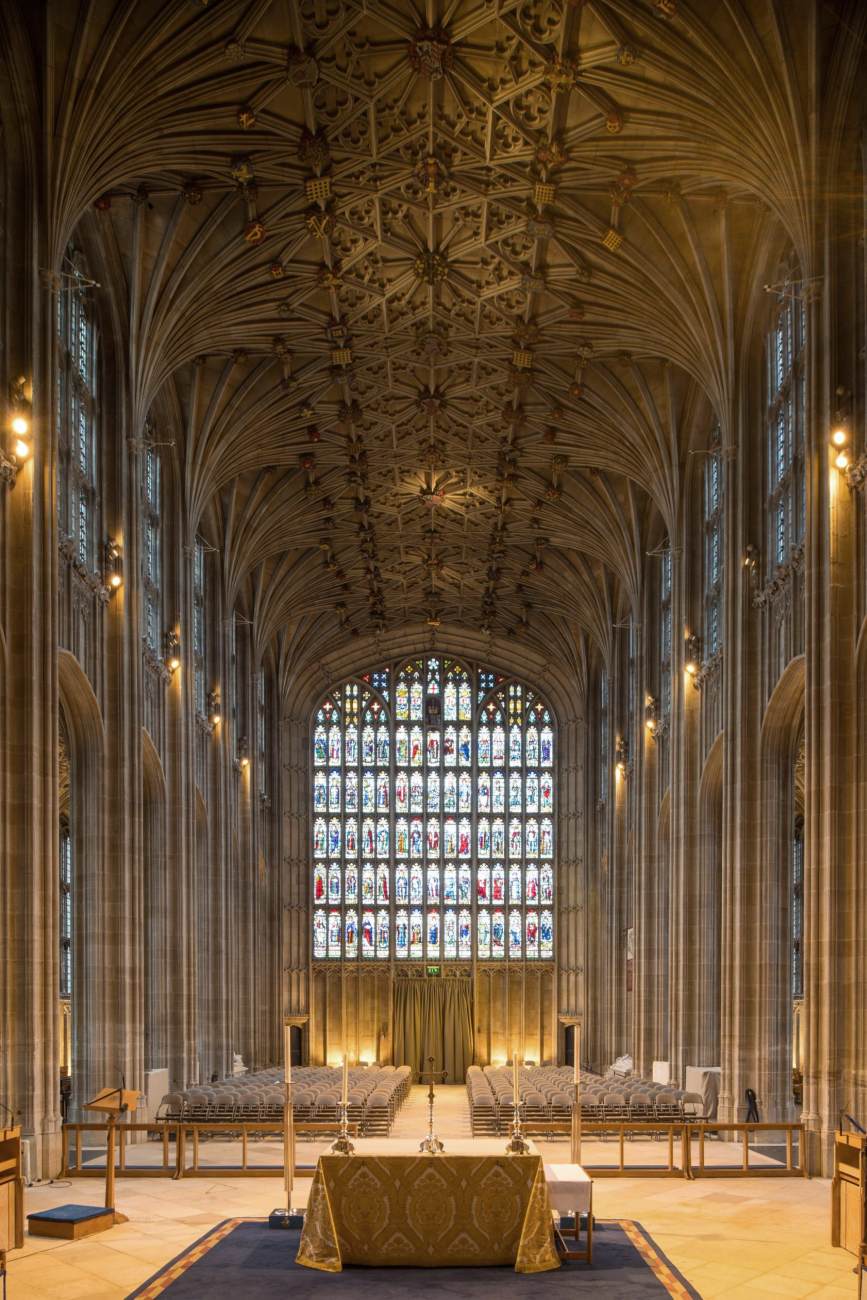
Interior view
- MEDIUM
- Photo
- TYPE
- Other
PALETTE
HOVER OR TAP A SWATCH FOR NAME, SHARE AND HEX. SAMPLED FROM THE IMAGE — INDICATIVE, NOT A PIGMENT ANALYSIS.
DEVELOPMENT BUILD — NOT FOR PUBLIC USE. CONTRIBUTE ON GITHUB.
03 — ARTWORK
PALETTE
HOVER OR TAP A SWATCH FOR NAME, SHARE AND HEX. SAMPLED FROM THE IMAGE — INDICATIVE, NOT A PIGMENT ANALYSIS.
COMMENTARY
UNDERLINED TERMS ARE DEFINED IN THE GLOSSARY.
By the end of the 15th century,the most active patrons of art in England were the king and the towns. In the 15th century Henry VI and VII built Eton College Chapela small separate place for worship, either part of a large church or a separate building. (begun in 1441), King's College Chapel, Cambridge (1446-1515), Henry VII and VIII St George's Chapel, Windsor Castle (begun 1481), and Henry VIII the Chapel of Henry VII at the east end of Westminster Abbey (1503-19). They are buildings of extremely simple exteriors and plans, but with plenty of masterfully ececuted decoration.
St George's Chapel at Windsor Castle was established in the 14th century by King Edward III and extensive enlargement began in the late 15th century. In June 1475 work began on clearing a site for a new St George's Chapel immediately west of the old one. Integral to this scheme were lodgings and a cloisterquadrilateral enclosure surrounded by covered walkways, the centre of activity for the inhabitants of a monastery. for the vicars opposite the site of the future west front of the chapel. Integral to this scheme were lodgings and a cloister for the vicars opposite the site of the future west front of the chapel. The aim was evidently to build a chapel in the guise of a minster. Hence the basilican format, the consistent use of stone vaulting, the long choirthe part of a church interior, usually raised and set apart from the rest of the church, reserved for the clergy to pray together, or for choral singing. Since Carolingian times, "choir" has been the word for the part of the central nave of the church extending over the crossing (the place where nave and transept intersect), and including the apse (a niche in the wall, roofed with a half dome) that often stands at the end of this area. and navethe main interior space of a church building. It may have parallel aisles on each side, often separated from it by pillars, and is intersected by the transept, which cuts across it at the point where the choir begins., the square ambulatorySemicircular or polygonal circulation space enclosing an apse or a straight-ended sanctuary. linking up with the old chapel, the transepts and (unexecuted) lanterna windowed turret set on a dome or roof, used to provide light to the area below.-tower over the crossingthe area of a church where the nave is intersected by the transept., and the basing of the internal elevations on the two grandest works of Perpendicularthe last of the three major styles of Gothic architecture in England, c. 1331-1530. It is characterized by comparatively simple decoration and soaring vertical lines, hence its name. It was preceded by the Decorated style. cathedralThe principal church of a province or diocese, where the throne of the bishop is placed. For reasons lost to time and tradition, a cathedral always faces west - toward the setting sun. The altar is placed at the east end. The main body, or nave, of the cathedral is usually divided into one main and two side aisles. These lead up to the north and south transepts, or arms of the cross, the shape in which a cathedral is usually formed. architecture of the previous century, the choir of Gloucester Abbey (now Cathedral) and the nave of Canterbury Cathedral.
The Chapel has been the location of many royal ceremonies, weddings and burials. Windsor Castle is a principal residence for Queen Elizabeth II.
@online{wga-ra61f7e19b4afce,
  author       = {Krén, Emil and Marx, Daniel},
  title        = {Interior view by ARCHITECT, English},
  organization = {{Web Gallery of Art}},
  date         = {2026-09-12},
  url          = {https://beta.wga.hu/artists/architect-english-r55f06f516af62a/interior-view-ra61f7e19b4afce},
  urldate      = {2026-09-12},
  langid       = {english}
}
ACCESSED 2026-09-12. REPLACE THE AUTHOR FIELD WITH THE COMMENTARY AUTHOR WHERE ONE IS NAMED.


