03 — ARTWORK
General view
- MEDIUM
- Photo
- TYPE
- Other
PALETTE
HOVER OR TAP A SWATCH FOR NAME, SHARE AND HEX. SAMPLED FROM THE IMAGE — INDICATIVE, NOT A PIGMENT ANALYSIS.
DEVELOPMENT BUILD — NOT FOR PUBLIC USE. CONTRIBUTE ON GITHUB.
03 — ARTWORK
PALETTE
HOVER OR TAP A SWATCH FOR NAME, SHARE AND HEX. SAMPLED FROM THE IMAGE — INDICATIVE, NOT A PIGMENT ANALYSIS.
COMMENTARY
UNDERLINED TERMS ARE DEFINED IN THE GLOSSARY.
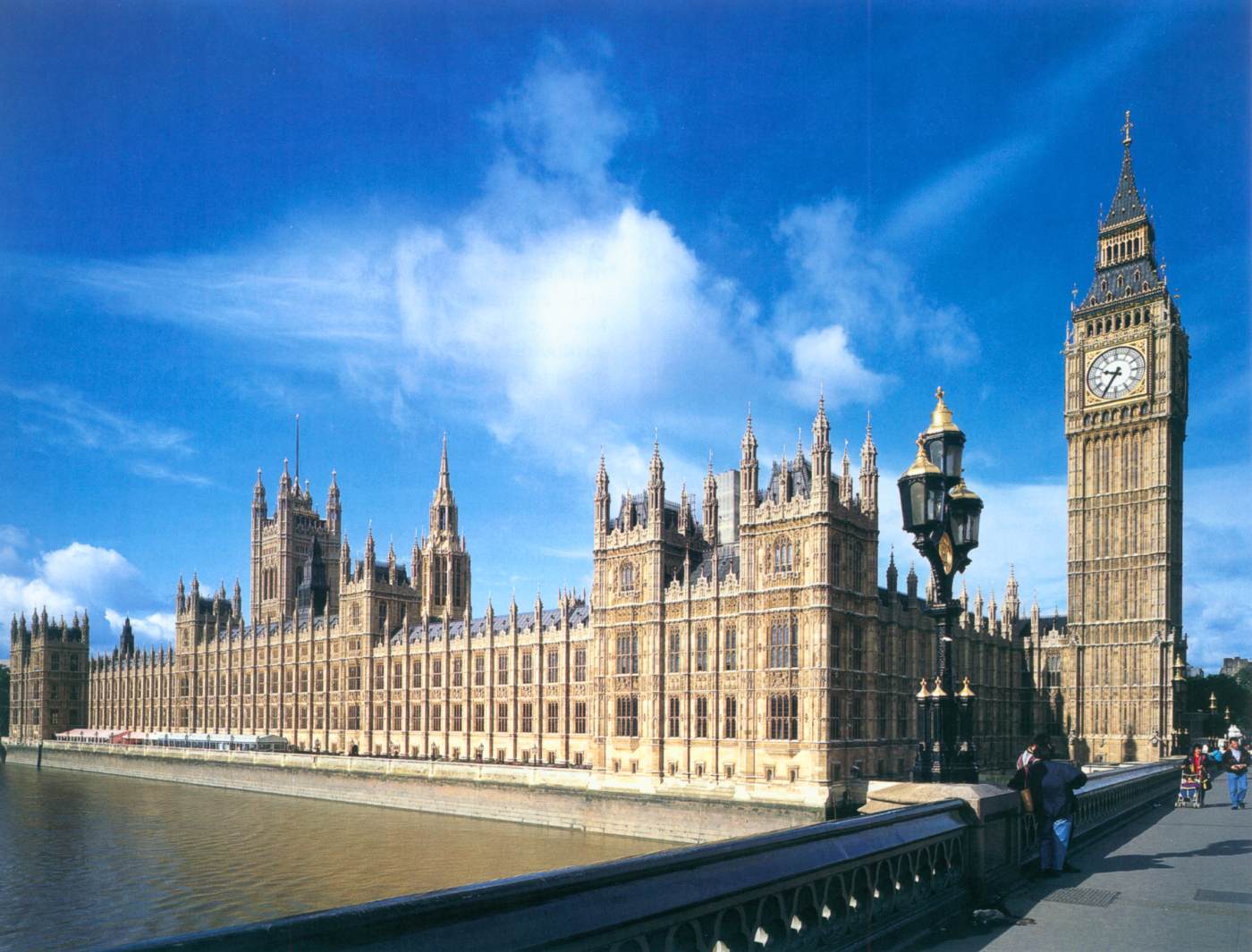
Like no other stylistic phase of English GothicGothic, which may well have originated with Alberti as a derogatory term and which certainly corresponds to Vasari's 'maniera tedesca' ('German style'), is properly the descriptive term for an artistic style which achieved its first full flowering in the Ile de France and the surrounding areas in the period between c. 1200 and c. 1270, and which then spread throughout northern Europe. It is characterized by the hitherto unprecedented integration of the arts of sculpture, painting, stained glass and architecture which is epitomized in the great cathedrals of Chartres, Amiens, and Reims or in the Sainte Chapelle in Paris. In all the arts the predominantly planar forms of the Romanesque are replaced by an emphasis on line. There is a transcendental quality, whether in the soaring forms of the pointed arches or in the new stress on the humanity of Christ, which similarly distinguishes it from the preceding Romanesque style. In thinking of Nicola (d. c. 1284) or Giovanni Pisano (d. after 1314) there is same danger of forgetting what had happened in French sculpture half a century or more earlier, and likewise it is hard to remember that the spectacular achievements of early Renaissance art are a singularly localized eddy in the continuing stream of late gothic European art. By northern European standards few Italian works of art can be called gothic without qualification, and the story of 13th and 14th century Italian architecture is as much one of resistance to the new style as of its reception, whether directly from France or through German or central European intermediaries. In sculpture and in painting, the Italian reluctance to distort the human figure, conditioned by a never wholly submerged awareness of the omnipresent antique heritage, gives a special quality to the work of even those artists such as Giovanni Pisano or Simone Martini who most closely approached a pure gothic style. Nevertheless, the vitalizing role of Northern gothic art throughout the early Renaissance and the period leading up to it should never be underestimated. The artistic, like the cultural and commercial, interaction was continuous and much of the Italian achievement is incomprehensible if seen in isolation. It is not merely at the level of direct exchanges between one artist and another, or the influence of one building; painting, manuscript or piece of sculpture upon another, that the effects are to be felt. The streaming quality of line which is so characteristic of Brunelleschi's early Renaissance architecture surely reflects a sensitivity to the gothic contribution which is entirely independent of, and lies much deeper than, the superficial particularities of form. The counterflow of influence and inspiration from South to North must likewise not be underrated. In particular, the contribution of Italian painters from Duccio and Simone Martini onwards is central to the evolution of the so-called International Gothic style developing in Burgundy, Bohemia and north Italy in the late 14th and early 15th centuries., Perpendicularthe last of the three major styles of Gothic architecture in England, c. 1331-1530. It is characterized by comparatively simple decoration and soaring vertical lines, hence its name. It was preceded by the Decorated style. could be considered an independent English creation, independent of France and the Continent. After the end of the Napoleonic wars, there was a great desire, as in other countries, to come up with a distinct national style. The culmination of these endeavours was the rebuilding of the Houses of Parliament in London, after the devastating fire in 1834. For the first time with such a major commission, the Gothic RevivalArchitectural style that drew its inspiration from medieval architecture and competed with the Neoclassical revivals in the United States and Great Britain. Only isolated examples of the style are to be found on the Continent. The earliest documented example of the revived use of Gothic architectural elements is Strawberry Hill, the home of the English writer Horace Walpole. As in many of the early Gothic Revival buildings, the Gothic was used here for its picturesque and romantic qualities without regard for its structural possibilities or original function. Another early example of the tendency toward ornamentation and decoration was Fonthill Abbey, designed by James Wyatt, a country house with a tower 82 metres high. Nothing could more clearly illustrate both the impracticality of usage and the romantic associations with medieval life. The earliest manifestations of an interest in the medieval era were in the private domain, but by the 1820s public buildings in England were also being designed in the Gothic mode. Perhaps no example is more familiar than the new Houses of Parliament (1840), designed by Sir Charles Barry and A.W.N. Pugin. In that large cluster of buildings, the haphazard picturesque quality of the early revival was replaced by a more conscientious adaptation of the medieval English style. Other structures built around mid-century were within this basic pattern. Later, the desire for more elegant and sumptuous landmarks created the last flowering of the style. was considered appropriate for a building of such national significance. The competition in 1835 was won by Sir Charles Barry, and his design realized in the Perpendicular style has become a national symbol.
Sir Charles Barry, assisted by Augustus Welby Northmore Pugin (1812-1852), designed the present buildings in the Gothic Revival style. Construction was begun in 1837, the cornerstone was laid in 1840, and work was finished in 1860. The Commons Chamber was burned out in one of the numerous air raids that targeted London during World War II, but it was restored and reopened in 1950.
Externally, apart from the Gothic detail, it conforms to the requirements of both ClassicalRelating to the culture of ancient Greece and Rome (classical Antiquity). The classical world played a profoundly important role in the Renaissance, with Italian scholars, writers, and artists seeing their own period as the rebirth (the "renaissance") of classical values after the Middle Ages. The classical world was considered the golden age for the arts, literature, philosophy, and politics. Concepts of the classical, however, changed greatly from one period to the next. Roman literature provided the starting point in the 14th century, scholars patiently finding, editing and translating a wide range of texts. In the 15th century Greek literature, philosophy and art - together with the close study of the remains of Roman buildings and sculptures-expanded the concept of the classical and ensured it remained a vital source of ideas and inspiration. and PicturesqueTerm covering a set of attitudes towards landscape, both real and painted, that flourished in the late 18th and early 19th centuries. It indicated an aesthetic approach that found pleasure in roughness and irregularity, and an attempt was made to establish it as a critical category between the 'beautiful' and the 'Sublime'. Picturesque scenes were thus neither serene (like the beautiful) nor awe-inspiring (like the Sublime), but full of variety, curious details, and interesting textures — medieval ruins were quintessentially Picturesque. Natural scenery tended to be judged in terms of how closely it approximated to the paintings of favoured artists such as Gaspard Dughet, and in 1801 the Supplement to Samuel Johnson's Dictionary by George Mason defined 'Picturesque as: 'what pleases the eye; remarkable for singularity; striking the imagination with the force of painting; to be expressed in painting; affording a good subject for a landscape; proper to take a landscape from.' The Picturesque Tour in search of suitable subjects was a feature of English landscape painting of the period, exemplified, for example, in the work of Girtin and (early in his career) of Turner, and the Picturesque generated a large literary output; much of it was pedantic and obsessive and it became a popular subject for satire. architectural doctrines. The river façadethe front or principal face of a building, especially one elaborately constructed; a blind façade is a façade that is purely decorative and does not relate to the structure of the building. of the building is largely symmetrical, but is enlivened by irregularly distributed tower structures. The narrow sides are distinguished by the Victoria Tower over the royal portala doorway. A portal recessed in several steps was frequently used in Romanesque architecture; this meant that the often relatively small entrance was given considerable emphasis on the façade. and, though not symmetrically placed, the famous clock tower of Big Ben.
The thoroughly rich details of the interiors of the Houses of Parliament (also called Palace of Westminster), the seat of the bicameral Parliament, including the House of Commons and the House of Lords, were designed by Pugin.
@online{wga-r573c06374a0cbc,
  author       = {Krén, Emil and Marx, Daniel},
  title        = {General view by BARRY, Sir Charles},
  organization = {{Web Gallery of Art}},
  date         = {2026-09-13},
  url          = {https://beta.wga.hu/artists/barry-sir-charles-r9f53604fe0c6b7/general-view-r573c06374a0cbc},
  urldate      = {2026-09-13},
  langid       = {english}
}
ACCESSED 2026-09-13. REPLACE THE AUTHOR FIELD WITH THE COMMENTARY AUTHOR WHERE ONE IS NAMED.


