03 — ARTWORK
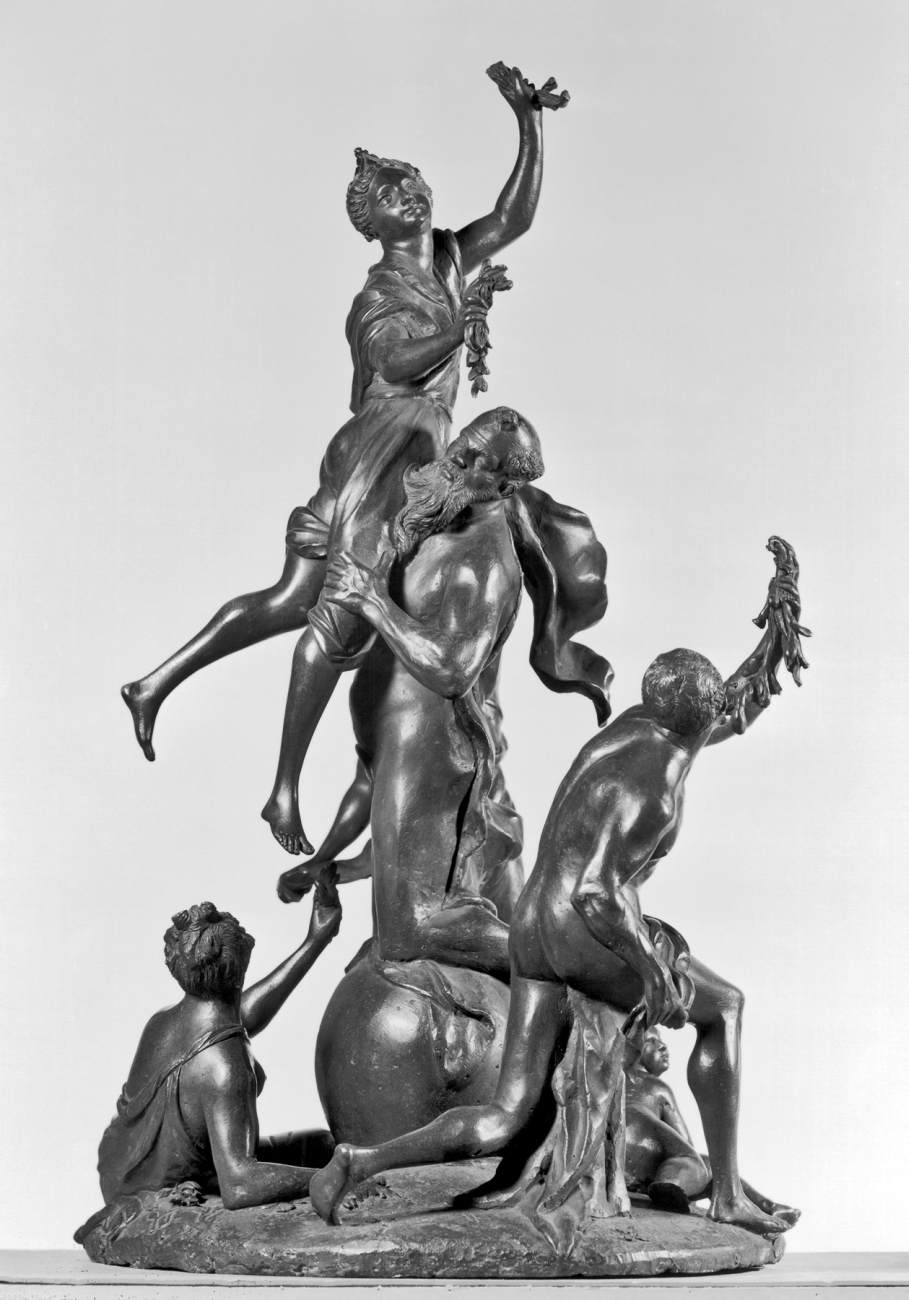
Allegorical Groups Representing the Four Continents: Asia
- MEDIUM
- Bronze, height 63 cm
- TYPE
- Mythological
PALETTE
HOVER OR TAP A SWATCH FOR NAME, SHARE AND HEX. SAMPLED FROM THE IMAGE — INDICATIVE, NOT A PIGMENT ANALYSIS.
DEVELOPMENT BUILD — NOT FOR PUBLIC USE. CONTRIBUTE ON GITHUB.
03 — ARTWORK
PALETTE
HOVER OR TAP A SWATCH FOR NAME, SHARE AND HEX. SAMPLED FROM THE IMAGE — INDICATIVE, NOT A PIGMENT ANALYSIS.
COMMENTARY
UNDERLINED TERMS ARE DEFINED IN THE GLOSSARY.
Francesco Bertos created a considerable number of complicated pyramidal groups in a very distinctive, ingenious style that mirrorsMirrors of glass 'silvered' on the back began to supplement those of polished metal in the 14th century, though it was only in the 16th century that high-quality glass ones were made (at Murano) on a scale that made them one of Venice's chief luxury exports. The connection between the increasing use of mirrors and the art of make-up (the mirror was a familiar symbol of vanity) and personal cleanliness is unexplored, but they had an influence on the development of the self-portrait in painting: Vasari assumed that Simone Martini (d. 1344) 'painted himself with two mirrors in order to get his head in profile'. Parmigianino (d. 1540) took self-scrutiny to a thoroughly introspective level in his Self-portrait in a (convex) Mirror. the lightness and airiness of contemporary RococoA style of design, painting, and architecture dominating the 18th century, often considered the last stage of the Baroque. Developing in the Paris townhouses of the French aristocracy at the turn of the 18th century, Rococo was elegant and ornately decorative, its mood lighthearted and witty. Louis XV furniture, richly decorated with organic forms, is a typical product. Leading exponents of the Rococo sryle included the French painters Antoine Watteau (1684-1721) and Jean-Honoré Fragonard (1732-1806), and the German architect Johann Balthasar Neumann (1687-1753). Rococo gave way to Neo-classicism. painting in France. Four groups in the Walters Art Museum are allegories of the four continents, of which the world was then thought to consist. All have their names engraved.
In the allegoryA work of art which represents some abstract quality or idea, either by means of a single figure (personification) or by grouping objects and figures together. Renaissance allegories make frequent allusions both to both Greek and Roman legends and literature, and also to the wealth of Christian allegorical stories and symbols developed during the Middle Ages. of Asia, an older man carries a beautiful young woman and figures in dance-like movements surround them. They hold pieces of coral, plants, and spices. This limited view of a vast continent contrasts markedly with the complexity of the representation of America.
@online{wga-r26865f153fd5e5,
  author       = {Krén, Emil and Marx, Daniel},
  title        = {Allegorical Groups Representing the Four Continents: Asia by BERTOS, Francesco},
  organization = {{Web Gallery of Art}},
  date         = {2026-09-09},
  url          = {https://beta.wga.hu/artists/bertos-francesco-r79f49c52946d1c/allegorical-groups-representing-the-four-continents-asia-r26865f153fd5e5},
  urldate      = {2026-09-09},
  langid       = {english}
}
ACCESSED 2026-09-09. REPLACE THE AUTHOR FIELD WITH THE COMMENTARY AUTHOR WHERE ONE IS NAMED.


