03 — ARTWORK
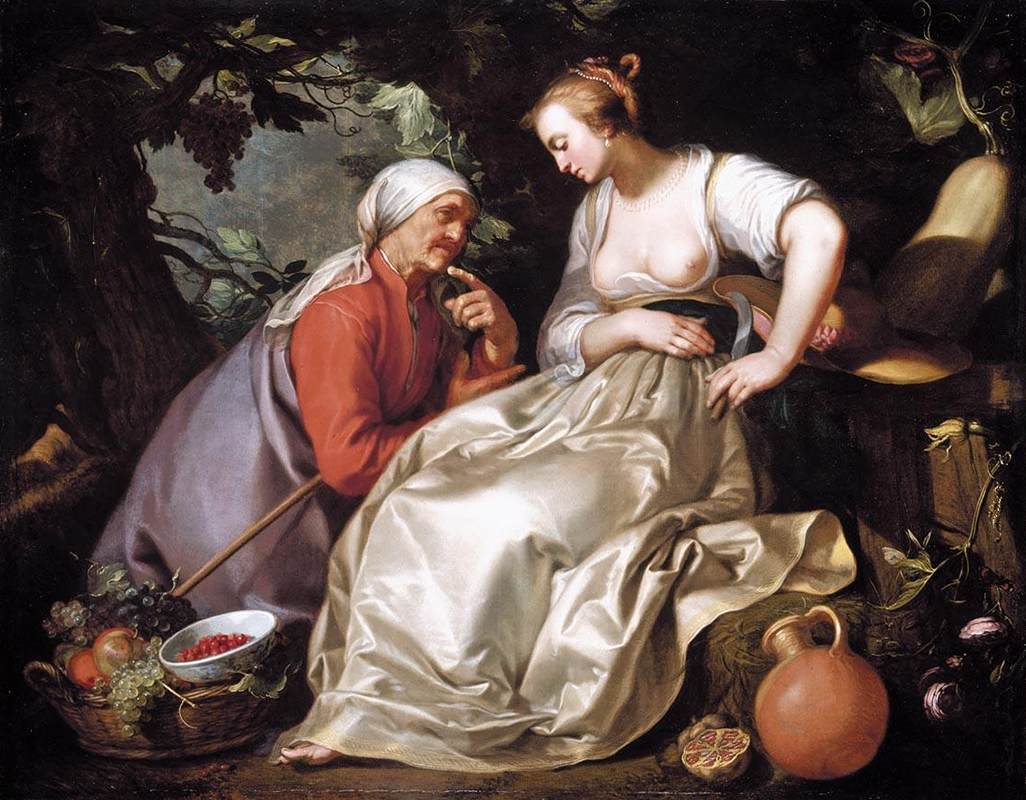
Vertumnus and Pomona
- MEDIUM
- Oil on canvas, 98 x 125 cm
- TYPE
- Mythological
PALETTE
HOVER OR TAP A SWATCH FOR NAME, SHARE AND HEX. SAMPLED FROM THE IMAGE — INDICATIVE, NOT A PIGMENT ANALYSIS.
DEVELOPMENT BUILD — NOT FOR PUBLIC USE. CONTRIBUTE ON GITHUB.
CURRENT LOCATION · Private Collection
03 — ARTWORK
PALETTE
HOVER OR TAP A SWATCH FOR NAME, SHARE AND HEX. SAMPLED FROM THE IMAGE — INDICATIVE, NOT A PIGMENT ANALYSIS.
COMMENTARY
UNDERLINED TERMS ARE DEFINED IN THE GLOSSARY.
Pomona, the classicalRelating to the culture of ancient Greece and Rome (classical Antiquity). The classical world played a profoundly important role in the Renaissance, with Italian scholars, writers, and artists seeing their own period as the rebirth (the "renaissance") of classical values after the Middle Ages. The classical world was considered the golden age for the arts, literature, philosophy, and politics. Concepts of the classical, however, changed greatly from one period to the next. Roman literature provided the starting point in the 14th century, scholars patiently finding, editing and translating a wide range of texts. In the 15th century Greek literature, philosophy and art - together with the close study of the remains of Roman buildings and sculptures-expanded the concept of the classical and ensured it remained a vital source of ideas and inspiration. goddess of fruit, and Vertumnus, the god of transformation, are the main figures in an episode in Ovid's Metamorphoses which is depicted here. Vertumnus enters Pomona's grove in order to convince her of his love. Because she had always run away on previous occasions when he came, he has cunningly dressed as an old woman on this occasion. By telling her about the allegoryA work of art which represents some abstract quality or idea, either by means of a single figure (personification) or by grouping objects and figures together. Renaissance allegories make frequent allusions both to both Greek and Roman legends and literature, and also to the wealth of Christian allegorical stories and symbols developed during the Middle Ages. of the grapevine and elm, he is able to convince her of the importance of togetherness, for the grapevine needs something it can climb up and the elm, when considered on its own, is useless. Persuaded, Pomona gives in to love and her innermost longings and they become a couple.
This is the last, largest and most accomplished of Bloemaert's treatments of this Ovidian subject, in which his earlier Mannerist traits have all but disappeared, to be replaced with a monumental classicism. The painting is signed and dated upper right: A.Bloemaert fc: / 1620.
@online{wga-r6616d021f9eef9,
  author       = {Krén, Emil and Marx, Daniel},
  title        = {Vertumnus and Pomona by BLOEMAERT, Abraham},
  organization = {{Web Gallery of Art}},
  date         = {2026-09-13},
  url          = {https://beta.wga.hu/artists/bloemaert-abraham-rcb490160a07500/vertumnus-and-pomona-r6616d021f9eef9},
  urldate      = {2026-09-13},
  langid       = {english}
}
ACCESSED 2026-09-13. REPLACE THE AUTHOR FIELD WITH THE COMMENTARY AUTHOR WHERE ONE IS NAMED.


