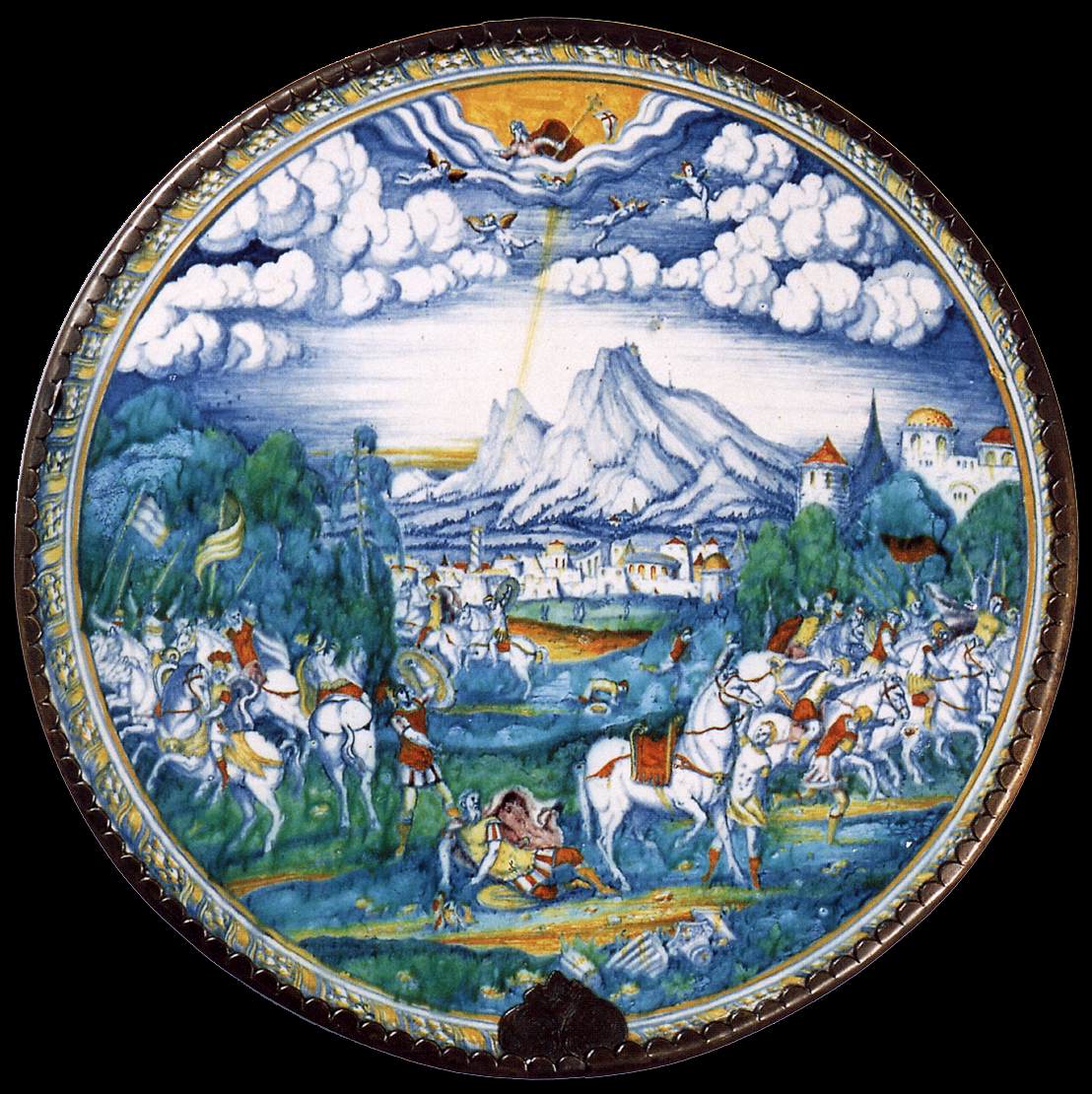
03 — ARTWORK
Dish with the Conversion of Saul
- MEDIUM
- Maiolica, diameter 39 cm
- TYPE
- Other
PALETTE
HOVER OR TAP A SWATCH FOR NAME, SHARE AND HEX. SAMPLED FROM THE IMAGE — INDICATIVE, NOT A PIGMENT ANALYSIS.
DEVELOPMENT BUILD — NOT FOR PUBLIC USE. CONTRIBUTE ON GITHUB.
CURRENT LOCATION · Rijksmuseum
03 — ARTWORK
PALETTE
HOVER OR TAP A SWATCH FOR NAME, SHARE AND HEX. SAMPLED FROM THE IMAGE — INDICATIVE, NOT A PIGMENT ANALYSIS.
COMMENTARY
UNDERLINED TERMS ARE DEFINED IN THE GLOSSARY.
This dish is unique for 16th-century maiolicaTin-glazed earthenware, particularly such ware produced in Italy. The term originally referred to the island of Majorca (or an alternate theory has it referring to Malaga), and designated only Hispano-Moresque lusterware; but since the 16th century it has been used to refer to Italian tin-glazed ware and imitations of the Italian ware. It is characterized by painted decoration of high quality executed in several colours on the dry but unfired tin glaze, generally with a final coating of clear lead glaze. The range of colours is typically limited to cobalt blue, copper green, manganese purple, antimony yellow, and iron red, with white provided by the tin-glaze material. When white is used for painting, it is applied onto a bluish-white glaze or blue ground. The luster is typically a golden colour derived from silver or a mother-of-pearl effect. north of the Alps. It can be regarded as wall decoration rather like a painting. The colour was applied in a medium that was not very common in Antwerp at the time: tin glazepaint applied so thinly that the base beneath it is visible through the layer. on earthenwareA ceramic product invented in England around 1720, which belongs to the category of fine stoneware. The porous white bodies are made of fired raw materials containing clay and kaolin as well as quartz, feldspar, and talc. A transparent glaze is applied upon the first or second firing. Earthenware, which is suitable for everyday use, is distinguished by its light, creamy surface. The most famous example of this category is made by the English firm of Wedgwood (since 1780).. It was painted in blue, green, yellow, ochre and purple. The dish is dated and monogrammed: J.A.B.
The archive catalogues no further works by this artist.
TRY SAME COLLECTION →@online{wga-r4b2c453983dd7e,
author = {Krén, Emil and Marx, Daniel},
title = {Dish with the Conversion of Saul by BOGAERT, Jan},
organization = {{Web Gallery of Art}},
date = {2026-09-13},
url = {https://beta.wga.hu/artists/bogaert-jan-r3a8ce5dbd85d5a/dish-with-the-conversion-of-saul-r4b2c453983dd7e},
urldate = {2026-09-13},
langid = {english}
}ACCESSED 2026-09-13. REPLACE THE AUTHOR FIELD WITH THE COMMENTARY AUTHOR WHERE ONE IS NAMED.