03 — ARTWORK
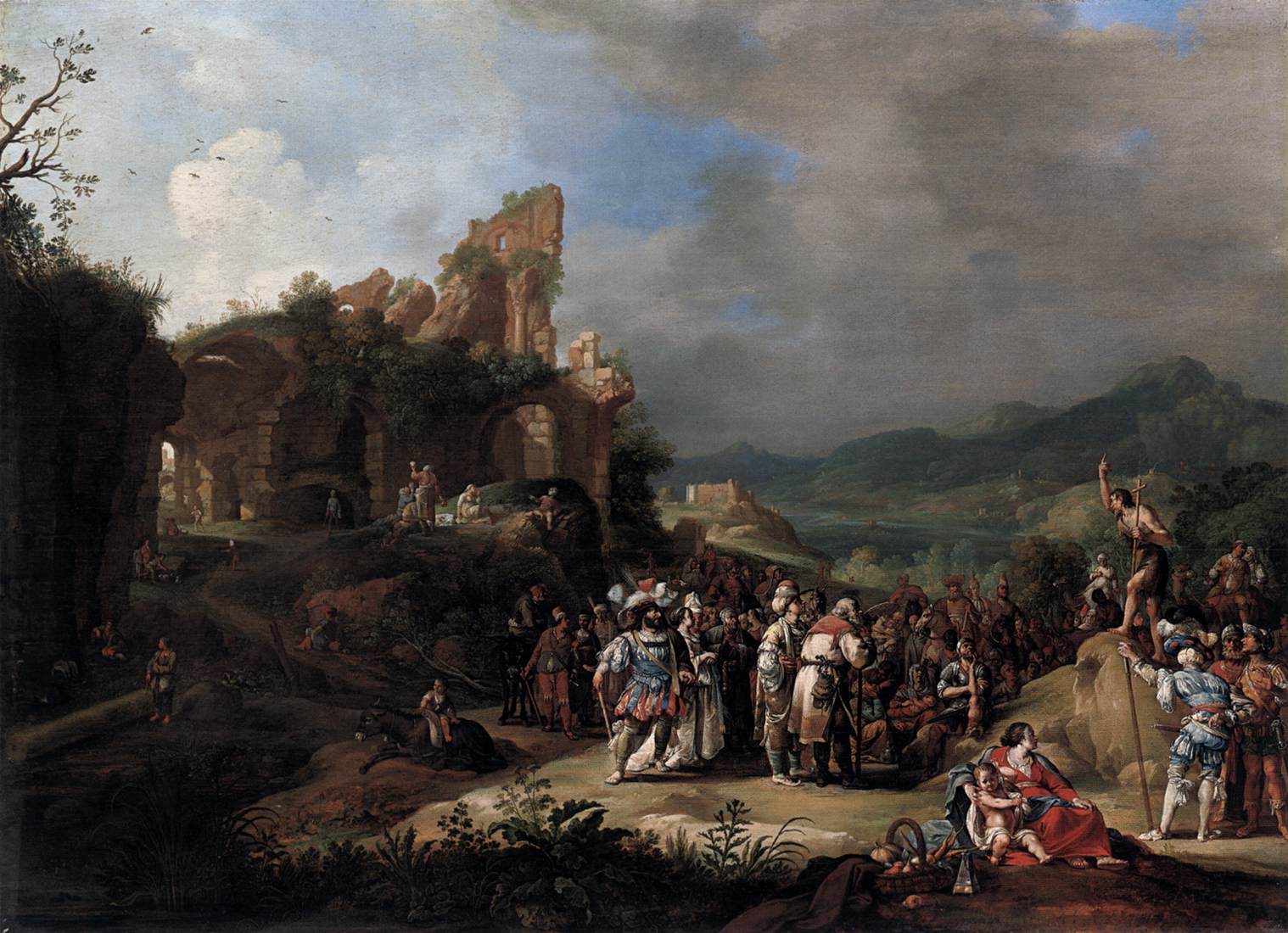
The Preaching of St John the Baptist
BREENBERGH, Bartholomeus · 1634 →
- MEDIUM
- Oil on panel, 55 x 75 cm
- TYPE
- Religious
PALETTE
HOVER OR TAP A SWATCH FOR NAME, SHARE AND HEX. SAMPLED FROM THE IMAGE — INDICATIVE, NOT A PIGMENT ANALYSIS.
DEVELOPMENT BUILD — NOT FOR PUBLIC USE. CONTRIBUTE ON GITHUB.
CURRENT LOCATION · Metropolitan Museum of Art
03 — ARTWORK
BREENBERGH, Bartholomeus · 1634 →
PALETTE
HOVER OR TAP A SWATCH FOR NAME, SHARE AND HEX. SAMPLED FROM THE IMAGE — INDICATIVE, NOT A PIGMENT ANALYSIS.
COMMENTARY
UNDERLINED TERMS ARE DEFINED IN THE GLOSSARY.
Breenbergh made contact with Lastman straightaway after his return to Amsterdam from Rome. That he was impressed by Lastman's paintings can be seen in the distinct Lastmanian character of the crowd of figures in his The Preaching of St John the Baptist. But his own contribution to the painting of the religious subject (one of the most popular in seventeenth-century Holland, probably because of the importance the Dutch placed on preaching the word of the Gospel) is new, and more significant. It is evident in his skilful integration of the figures into the vast panoramic Italianate landscape, his full control of light and atmospheric effects, and the pronounced accent provided by huge imaginary classicalRelating to the culture of ancient Greece and Rome (classical Antiquity). The classical world played a profoundly important role in the Renaissance, with Italian scholars, writers, and artists seeing their own period as the rebirth (the "renaissance") of classical values after the Middle Ages. The classical world was considered the golden age for the arts, literature, philosophy, and politics. Concepts of the classical, however, changed greatly from one period to the next. Roman literature provided the starting point in the 14th century, scholars patiently finding, editing and translating a wide range of texts. In the 15th century Greek literature, philosophy and art - together with the close study of the remains of Roman buildings and sculptures-expanded the concept of the classical and ensured it remained a vital source of ideas and inspiration. ruins inspired by the remains of the Colosseum.
@online{wga-r817ee7ee23fd4a,
  author       = {Krén, Emil and Marx, Daniel},
  title        = {The Preaching of St John the Baptist by BREENBERGH, Bartholomeus},
  organization = {{Web Gallery of Art}},
  date         = {2026-09-13},
  url          = {https://beta.wga.hu/artists/breenbergh-bartholomeus-rb1745d1c708566/the-preaching-of-st-john-the-baptist-r817ee7ee23fd4a},
  urldate      = {2026-09-13},
  langid       = {english}
}
ACCESSED 2026-09-13. REPLACE THE AUTHOR FIELD WITH THE COMMENTARY AUTHOR WHERE ONE IS NAMED.


