03 — ARTWORK
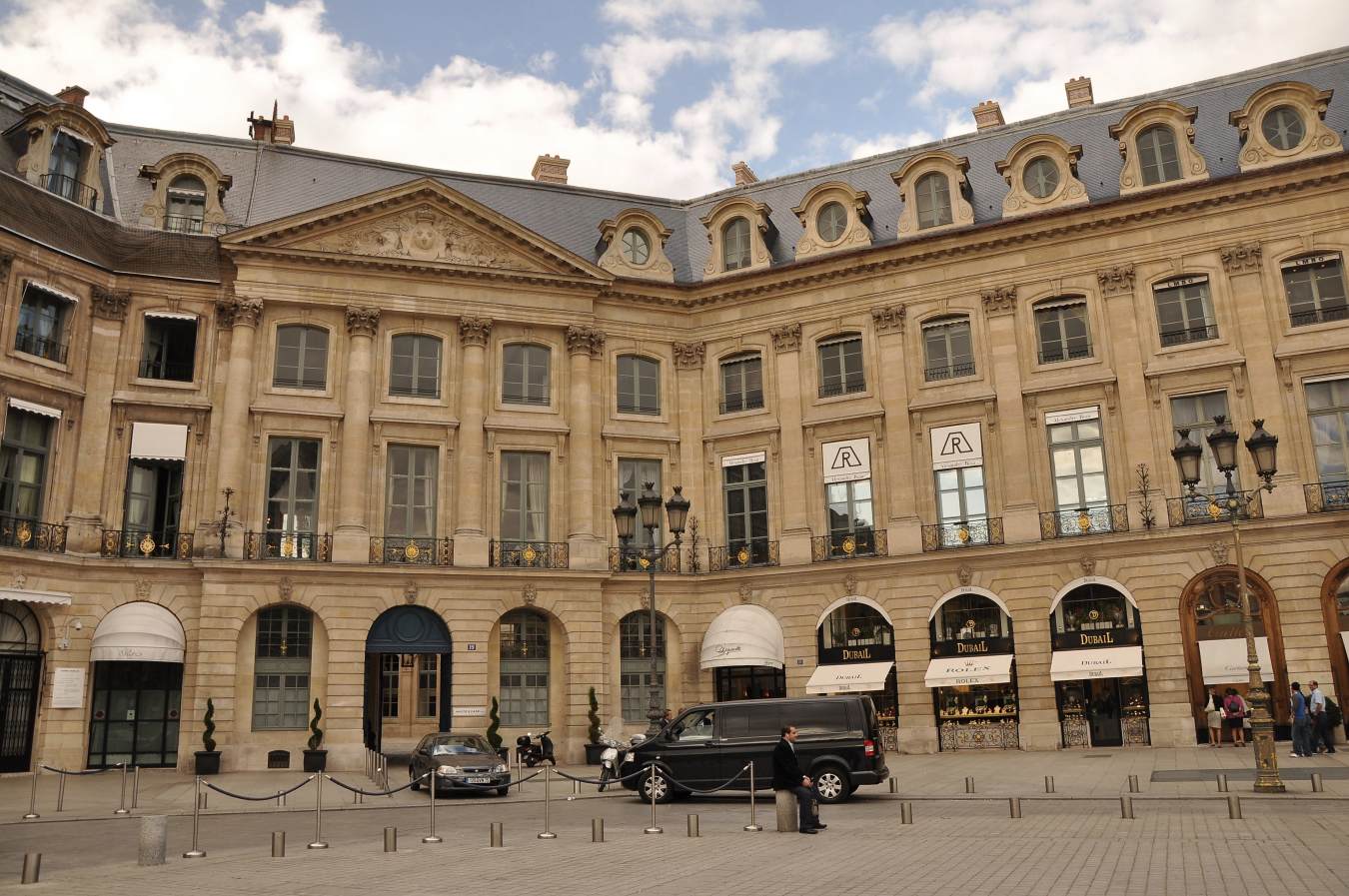
Exterior view
- MEDIUM
- Photo
- TYPE
- Other
PALETTE
HOVER OR TAP A SWATCH FOR NAME, SHARE AND HEX. SAMPLED FROM THE IMAGE — INDICATIVE, NOT A PIGMENT ANALYSIS.
DEVELOPMENT BUILD — NOT FOR PUBLIC USE. CONTRIBUTE ON GITHUB.
03 — ARTWORK
PALETTE
HOVER OR TAP A SWATCH FOR NAME, SHARE AND HEX. SAMPLED FROM THE IMAGE — INDICATIVE, NOT A PIGMENT ANALYSIS.
COMMENTARY
UNDERLINED TERMS ARE DEFINED IN THE GLOSSARY.
During the 1680s Bullet was responsible for a number of designs for private houses which show him to be a supporter of the classicalRelating to the culture of ancient Greece and Rome (classical Antiquity). The classical world played a profoundly important role in the Renaissance, with Italian scholars, writers, and artists seeing their own period as the rebirth (the "renaissance") of classical values after the Middle Ages. The classical world was considered the golden age for the arts, literature, philosophy, and politics. Concepts of the classical, however, changed greatly from one period to the next. Roman literature provided the starting point in the 14th century, scholars patiently finding, editing and translating a wide range of texts. In the 15th century Greek literature, philosophy and art - together with the close study of the remains of Roman buildings and sculptures-expanded the concept of the classical and ensured it remained a vital source of ideas and inspiration. tradition of the previous generation, and little affected by the innovations of Hardouin-Mansart at Versailles. In the very first years of the eighteenth century, however, he built two houses of great novelty. The rich financier Crozat the Elder bought two of the sites at the corner of the Place Vendôme and commissioned Bullet to construct on them houses for himself (finished 1702) and for his son-in-law, the Comte d'Évreux (1707).
The irregulatory of the site of the Hôtel d'Évreux, of which the street frontage consists only of four out of five bays of the cut-off corner of the Place Vendôme, has provoked a brilliant solution, including a diagonal approach to the courtyard, through a circular <i>porte-cochère.</i> Bulllet has managed to form a symmetrically disposed court, rounded at one end and closed by a porticoUsually open porch supported by columns or pillars on the main entrance side of a buildings. Frequently supports a pediment. at the other.
The photo shows the frontage of the Hôtel d'Évreux.
View the plan of the ground floor in <a href="#" onClick="w=window.open ('/support/plans/b/bullet/evreux.html', 'newWin', 'scrollbars=yes,status=no,dependent=yes,screenX=0,screenY=0,width=400,height=600');w.opener=this;w.focus();return false">small</a> or <a onclick="return OpenOther('/html/b/bullet/evreux_l.html')" href="/html/b/bullet/evreux_l.html">enlarged</a> form.
@online{wga-r7d6e030e230c2b,
  author       = {Krén, Emil and Marx, Daniel},
  title        = {Exterior view by BULLET, Pierre},
  organization = {{Web Gallery of Art}},
  date         = {2026-09-13},
  url          = {https://beta.wga.hu/artists/bullet-pierre-r30cc5e31e1c966/exterior-view-r7d6e030e230c2b},
  urldate      = {2026-09-13},
  langid       = {english}
}
ACCESSED 2026-09-13. REPLACE THE AUTHOR FIELD WITH THE COMMENTARY AUTHOR WHERE ONE IS NAMED.


