03 — ARTWORK
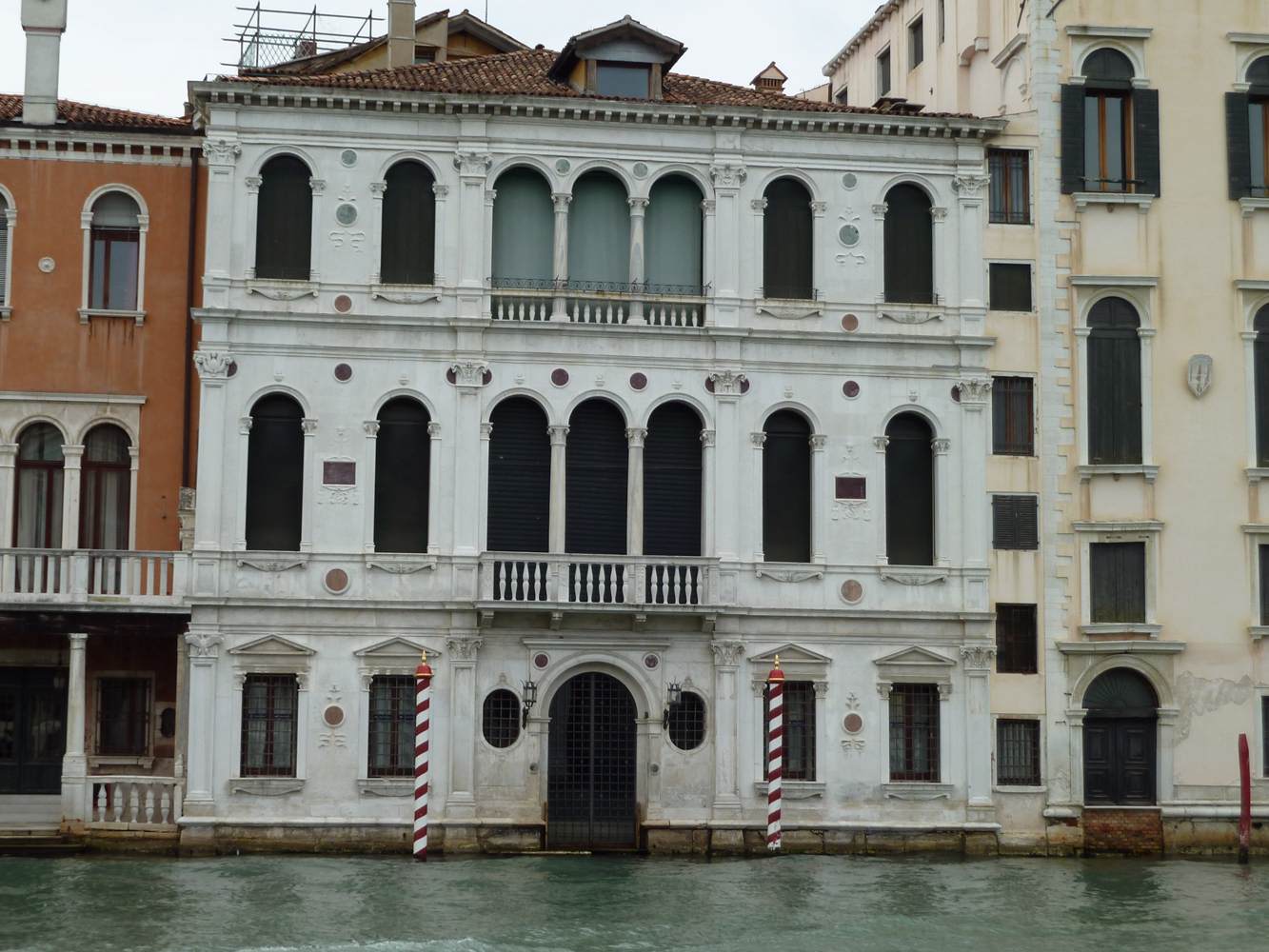
Palazzo Grimani Marcello: Façade
BUORA, Giovanni di Antonio · 1510 →
- MEDIUM
- Photo
- TYPE
- Other
PALETTE
HOVER OR TAP A SWATCH FOR NAME, SHARE AND HEX. SAMPLED FROM THE IMAGE — INDICATIVE, NOT A PIGMENT ANALYSIS.
DEVELOPMENT BUILD — NOT FOR PUBLIC USE. CONTRIBUTE ON GITHUB.
CURRENT LOCATION · Canal Grande
03 — ARTWORK
BUORA, Giovanni di Antonio · 1510 →
PALETTE
HOVER OR TAP A SWATCH FOR NAME, SHARE AND HEX. SAMPLED FROM THE IMAGE — INDICATIVE, NOT A PIGMENT ANALYSIS.
COMMENTARY
UNDERLINED TERMS ARE DEFINED IN THE GLOSSARY.
The current building is the result of the restoration of a pre-existing building, probably dating back to the 12th century. The façadethe front or principal face of a building, especially one elaborately constructed; a blind façade is a façade that is purely decorative and does not relate to the structure of the building. and the restoration works had been commissioned by the Grimani family from the architect Giovanni Buora, who realised the current building with its architectural and ornamental features from the late Lombard period.
The façade is completely clad with stone. On the ground floor there is an arched water gate decorated with contrasting marbleloosely applied to any hard limestone that can be sawn into thin slabs and will take a good polish so that it is suitable for decorative work; more strictly, it refers to metamorphosed limestones whose structure has been recrystallized by heat or pressure. Marbles are widely disseminated and occur in a great variety of colours and patterns, but certain types have been particularly prized by sculptors. The most famous of Greek white marbles in the ancient world was the close-grained Pentelic, which was quarried at Mount Pentelicon in Attica. The Elgin Marbles are carved in Pentelic. Widely used also were the somewhat coarser-grained translucent white marbles from the Aegean islands of Paros and Naxos. Parian marble was used for the celebrated Mausoleum at Halicarnassus. The pure white Carrara marble, quarried at Massa, Carrara, and Pietra Santa in Tuscany from the 3rd century BC, is the most famous of all sculptors' stones. It was used for the Apollo Belvedere, and was much favoured in the Renaissance, particularly by Michelangelo, who often visited the quarries to select material for his work. Neoclassical sculptors also favoured Carrara marble because of its ability to take a smooth, sleek surface, but it can look rather 'dead' compared with some of the finest Greek marbles. medallions. The ground floor rectangular windows are surmounted by a triangular tympanumIn classical architecture, the triangular area enclosed by a pediment, often decorated with sculptures. In medieval architecture, the semi-circular area over a a door's lintel, enclosed by an arch, often decorated with sculptures or mosaics. resting on a slightly extended architraveIn classical architecture, the main beam resting on the capitals of the columns (i.e. the lowest part of the entablature); the moulding around a window or door.. The first and second floors have three-mullioned windows with balcony. The façade is divided into three, according to the style of the era, by pilasters with Corinthian capitals. Much attention was paid to the decoration of the façade, with precious marble medallions and rectangles, festoons.
During the 18th century the internal structure of the palace was radically modified.


The archive catalogues no further works by this artist.
TRY SAME COLLECTION →@online{wga-r75e9ececc28403,
author = {Krén, Emil and Marx, Daniel},
title = {Palazzo Grimani Marcello: Façade by BUORA, Giovanni di Antonio},
organization = {{Web Gallery of Art}},
date = {2026-09-13},
url = {https://beta.wga.hu/artists/buora-giovanni-di-antonio-rd8a7738d542fb0/palazzo-grimani-marcello-faade-r75e9ececc28403},
urldate = {2026-09-13},
langid = {english}
}ACCESSED 2026-09-13. REPLACE THE AUTHOR FIELD WITH THE COMMENTARY AUTHOR WHERE ONE IS NAMED.