03 — ARTWORK
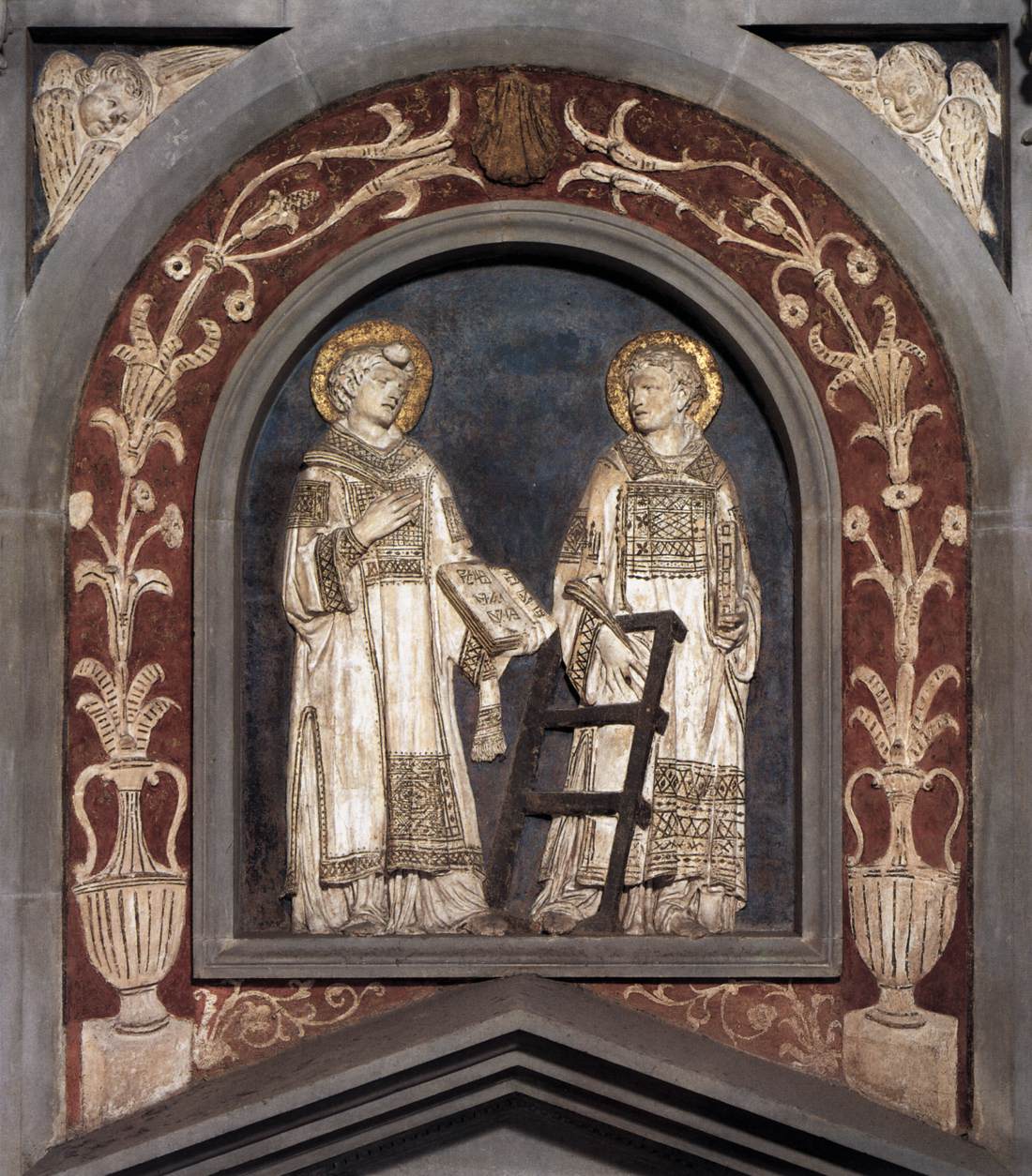
St Stephen and St Lawrence
- MEDIUM
- Polychrome terracotta, 215 x 180 cm
- TYPE
- Religious
PALETTE
HOVER OR TAP A SWATCH FOR NAME, SHARE AND HEX. SAMPLED FROM THE IMAGE — INDICATIVE, NOT A PIGMENT ANALYSIS.
DEVELOPMENT BUILD — NOT FOR PUBLIC USE. CONTRIBUTE ON GITHUB.
CURRENT LOCATION · Old Sacristy
03 — ARTWORK
PALETTE
HOVER OR TAP A SWATCH FOR NAME, SHARE AND HEX. SAMPLED FROM THE IMAGE — INDICATIVE, NOT A PIGMENT ANALYSIS.
COMMENTARY
UNDERLINED TERMS ARE DEFINED IN THE GLOSSARY.
Chronologically close together and perhaps the first works executed for the Sacristya side room of a church where a priest puts on his vestments and where the sacred vessels and vestments are kept. are the two arched reliefs in polychrome terracottaUnglazed fired clay. It is used for architectural features and ornaments, vessels, and sculptures. above the doors, in which, especially between St Stephen and St Lawrence, the dramatic force of the disputation reaches a disturbing pitch. The pliability of the material, terracotta and stuccoA type of light, malleable plaster made from dehydrated lime (calcium carbonate) mixed with powdered marble and glue and sometimes reinforced with hair. It is used for sculpture and architectural decoration, both external and internal. In a looser sense, the term is applied to a plaster coating applied to the exterior of buildings, but stucco is a different substance from plaster (which is calcium sulphate). Stucco in the more restricted sense has been known to virtually every civilization. In Europe it was exploited most fully from the 16th century to the 18th century, notable exponents being the artists of the School of Fontainebleau and Giacomo Serpotta. By adding large quantities of glue and colour to the stucco mixture stuccatori were able to produce a material that could take a high polish and assume the appearance of marble. Indeed, sometimes it is difficult to distinguish from real marble without touching it (stucco feels warmer)., was in itself suitable for creating a charged and uneasy atmosphere.
The relics of St Stephen and St Lawrence had been buried in the Roman church of San Lorenzo fuori le Mura. Since the early Middle Ages the two saints were frequently depicted next to each other. Stephen is identified by the attributes of his book and palm frond, and Lawrence by the grill on which, according to tradition, he was martyred during the reign of Emperor Valerian.
@online{wga-r3947c445379f5e,
  author       = {Krén, Emil and Marx, Daniel},
  title        = {St Stephen and St Lawrence by DONATELLO},
  organization = {{Web Gallery of Art}},
  date         = {2026-09-13},
  url          = {https://beta.wga.hu/artists/donatello-r431353c604b592/st-stephen-and-st-lawrence-r3947c445379f5e},
  urldate      = {2026-09-13},
  langid       = {english}
}
ACCESSED 2026-09-13. REPLACE THE AUTHOR FIELD WITH THE COMMENTARY AUTHOR WHERE ONE IS NAMED.


