03 — ARTWORK
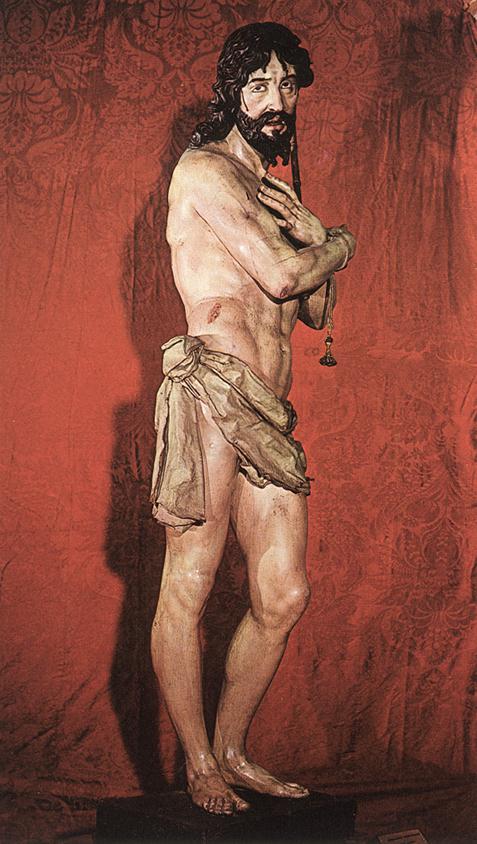
Ecce Homo
- MEDIUM
- Polychrome wood
- TYPE
- Religious
PALETTE
HOVER OR TAP A SWATCH FOR NAME, SHARE AND HEX. SAMPLED FROM THE IMAGE — INDICATIVE, NOT A PIGMENT ANALYSIS.
DEVELOPMENT BUILD — NOT FOR PUBLIC USE. CONTRIBUTE ON GITHUB.
03 — ARTWORK
PALETTE
HOVER OR TAP A SWATCH FOR NAME, SHARE AND HEX. SAMPLED FROM THE IMAGE — INDICATIVE, NOT A PIGMENT ANALYSIS.
COMMENTARY
UNDERLINED TERMS ARE DEFINED IN THE GLOSSARY.
During the 17th century, the great centers of Spanish sculpture were Valladolid, Madrid, Granada, and Seville. These schools may be distinguished by the greater pathos of the Castilian images, as compared with the ideal beauty sought by the sculptors of Andalusia.
The school of Valladolid began with Gregorio Fernández, whose style owes less to Italy than it does to the North. His first known work is the recumbent Christ of the Capuchins (1605), commissioned by Philip III and now in El Pardo. Sober, refined, profoundly sensitive in his modeling, and restrained in his use of drama, Gregorio Fernández turned away from idealist aesthetics to portray the emotions of real life, suffering, agony, and death. He also carved retables, and his studio produced effigies for the Holy Week processions in Valladolid.
@online{wga-r64a906b3dc5279,
  author       = {Krén, Emil and Marx, Daniel},
  title        = {Ecce Homo by FERNÁNDEZ, Gregorio},
  organization = {{Web Gallery of Art}},
  date         = {2026-09-13},
  url          = {https://beta.wga.hu/artists/fernndez-gregorio-r83a29c7f732b54/ecce-homo-r64a906b3dc5279},
  urldate      = {2026-09-13},
  langid       = {english}
}
ACCESSED 2026-09-13. REPLACE THE AUTHOR FIELD WITH THE COMMENTARY AUTHOR WHERE ONE IS NAMED.


