03 — ARTWORK
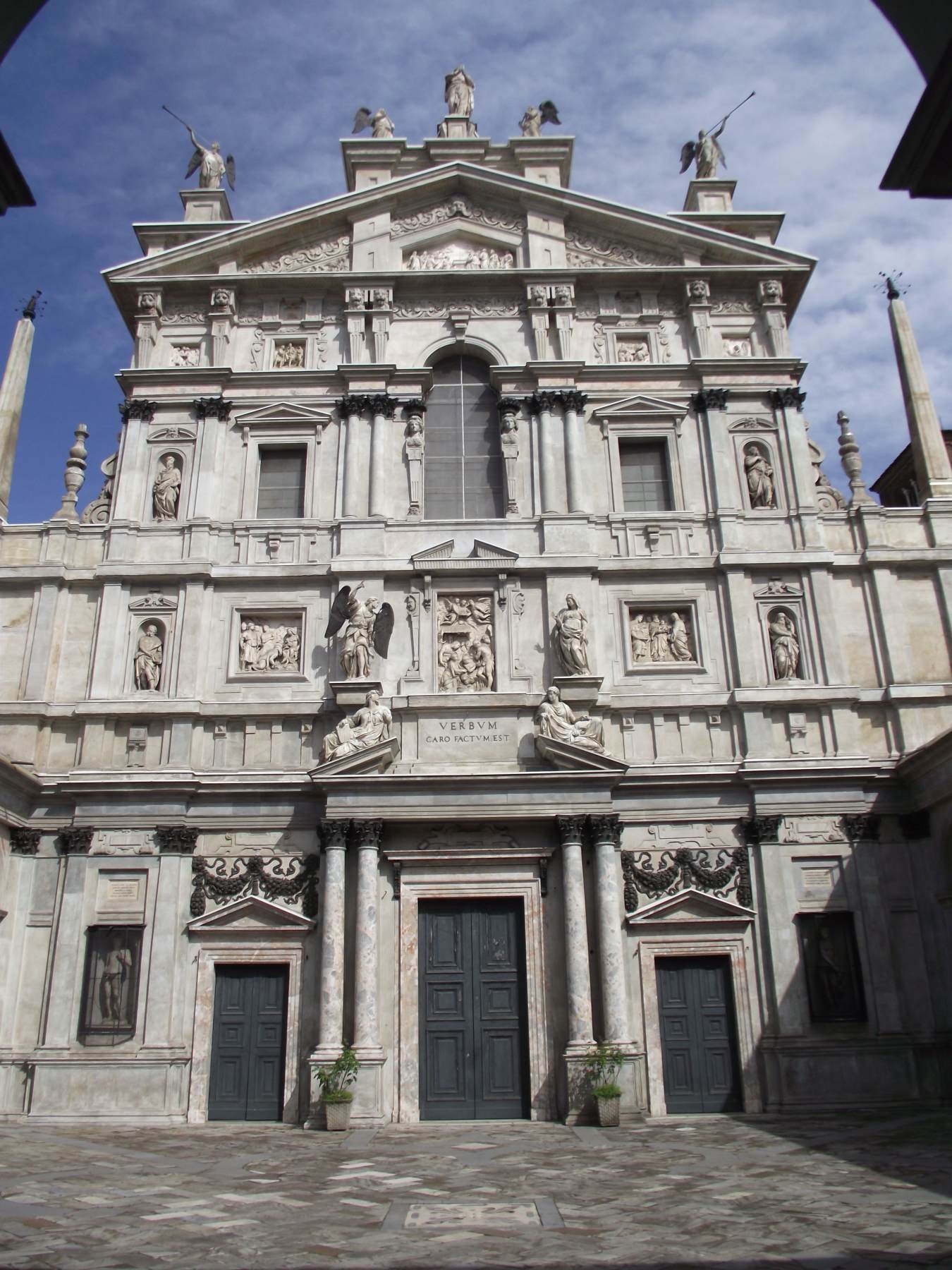
View of the façade
- MEDIUM
- Photo
- TYPE
- Other
PALETTE
HOVER OR TAP A SWATCH FOR NAME, SHARE AND HEX. SAMPLED FROM THE IMAGE — INDICATIVE, NOT A PIGMENT ANALYSIS.
DEVELOPMENT BUILD — NOT FOR PUBLIC USE. CONTRIBUTE ON GITHUB.
03 — ARTWORK
PALETTE
HOVER OR TAP A SWATCH FOR NAME, SHARE AND HEX. SAMPLED FROM THE IMAGE — INDICATIVE, NOT A PIGMENT ANALYSIS.
COMMENTARY
UNDERLINED TERMS ARE DEFINED IN THE GLOSSARY.
Annibale Fontana was the most distinguished Milanese sculptor in the third quarter of the sixteenth century, and his most distinguished sculptural complex was the façadethe front or principal face of a building, especially one elaborately constructed; a blind façade is a façade that is purely decorative and does not relate to the structure of the building. of Santa Maria dei Miracoli presso San Celso. Designed by Galeazzo Alessi and completed in 1572, the façade made provision for a central reliefA sculptural work in which all or part projects from the flat surface. There are three basic forms: low relief (bas-relief, basso rilievo), in which figures project less than half their depth from the background; medium relief (mezzo-rilievo), in which figures are seen half round; and high relief (alto rilievo), in which figures are almost detached from their background. over the main entrance, lateral reliefs over the two doorways at the sides, four figures in superimposed niche at the sides, and four small reliefs in the upper register, as well as for two sibylsIn antiquity, women who could prophesy. The many Sibylline prophecies were kept in Rome and consulted by the Senate. In Christian legend, Sibyls foretold the Birth, Passion and Resurrection of Christ, just as the male prophets of the Bible did. Originally, in the period of classical antiquity, there was only one Sibyl; the number gradually rose to ten. In early Christianity it was further raised to 12, in analogy to the 12 prophets of the Old Testament. on the pedimenta gable supported actually or apparently on columns. above the entrance and an Annunciationthe term for the event described in the Gospel according to St. Luke, when the Angel Gabriel brings the Virgin Mary the news that she is to bear her son, Jesus Christ. The Annunciation was among the most widespread pictorial subjects of European art during the Middle Ages and the Renaissance. group above. Beside the lateral doorways were statues of Adam and Eve.
The first sculptor working on the façade was Stoldo di Gino Lorenzi, who delivered Adam in 1575, three years later completed the Annunciation, both redolent of Florentine academism. He also made the central relief of Nativity. Apparently due to differences with Annibale Fontana, with whom he shared the commission, Stoldo returned to Tuscany in 1582, and the other parts of the façade were executed by Annibale Fontane.
Annibale Fontana worked on the façade of Santa Maria dei Miracoli from 1575 to 1587: he made the statues of the prophets Isaiah and Jeremiah for the lower niches, the two Sibyls on the main portala doorway. A portal recessed in several steps was frequently used in Romanesque architecture; this meant that the often relatively small entrance was given considerable emphasis on the façade., the reliefs with the Adoration of the Shepherds, the Presentation in the Temple and the Wedding at Cana, the statue of the prophet Zechariah in the upper niche, two Angels of the fastigium.
@online{wga-r43a5ac1ad59cba,
  author       = {Krén, Emil and Marx, Daniel},
  title        = {View of the façade by FONTANA, Annibale},
  organization = {{Web Gallery of Art}},
  date         = {2026-09-09},
  url          = {https://beta.wga.hu/artists/fontana-annibale-ra0d41884dae63d/view-of-the-faade-r43a5ac1ad59cba},
  urldate      = {2026-09-09},
  langid       = {english}
}
ACCESSED 2026-09-09. REPLACE THE AUTHOR FIELD WITH THE COMMENTARY AUTHOR WHERE ONE IS NAMED.


