03 — ARTWORK
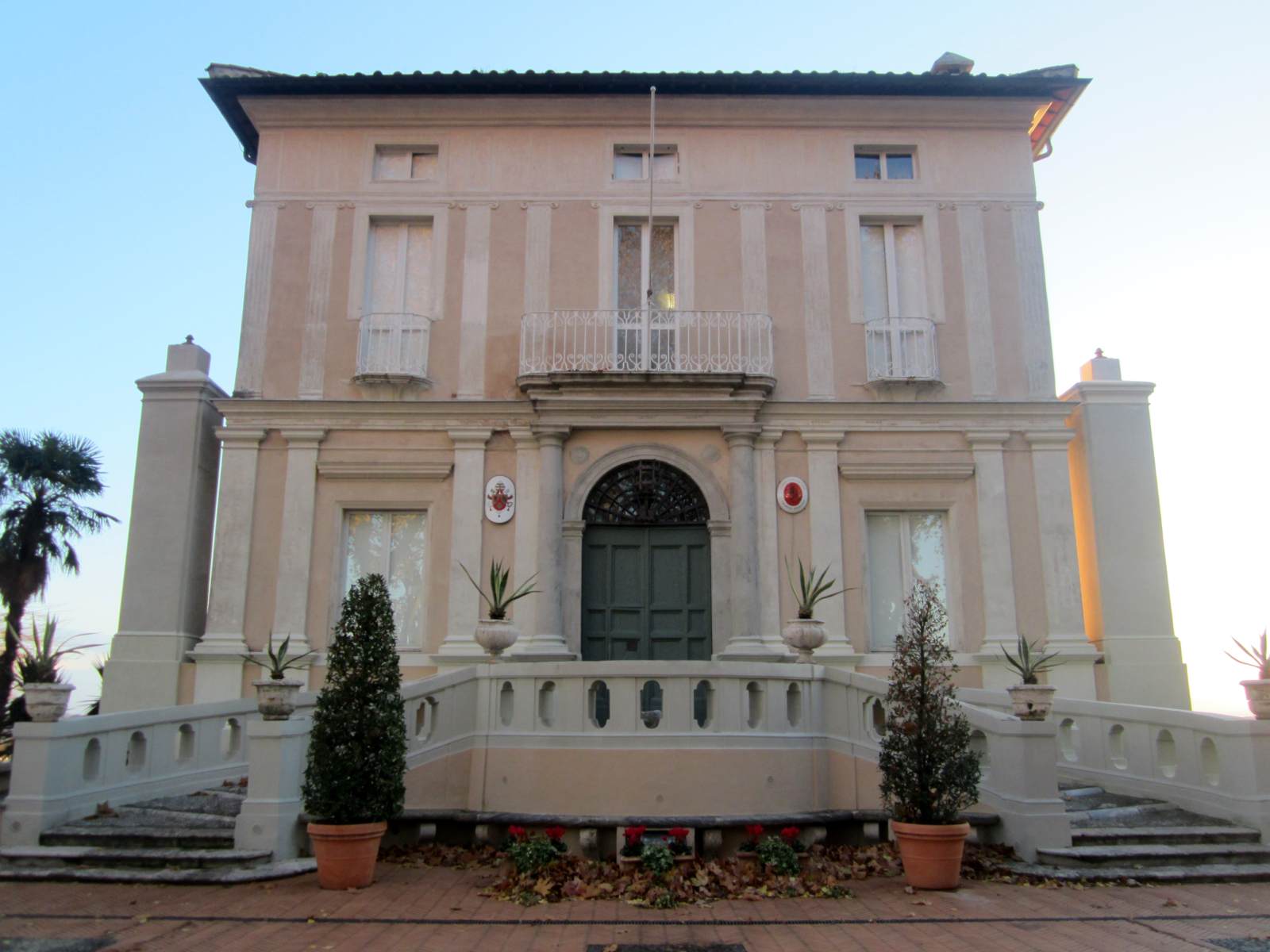
Exterior view
- MEDIUM
- Photo
- TYPE
- Other
PALETTE
HOVER OR TAP A SWATCH FOR NAME, SHARE AND HEX. SAMPLED FROM THE IMAGE — INDICATIVE, NOT A PIGMENT ANALYSIS.
DEVELOPMENT BUILD — NOT FOR PUBLIC USE. CONTRIBUTE ON GITHUB.
03 — ARTWORK
PALETTE
HOVER OR TAP A SWATCH FOR NAME, SHARE AND HEX. SAMPLED FROM THE IMAGE — INDICATIVE, NOT A PIGMENT ANALYSIS.
COMMENTARY
UNDERLINED TERMS ARE DEFINED IN THE GLOSSARY.
In addition to the completion of Raphael's unfulfilled commissions, Giulio immediately received independent architectural assignments. In 1520-21 he had the opportunity to capitalize on the fashion for classicalRelating to the culture of ancient Greece and Rome (classical Antiquity). The classical world played a profoundly important role in the Renaissance, with Italian scholars, writers, and artists seeing their own period as the rebirth (the "renaissance") of classical values after the Middle Ages. The classical world was considered the golden age for the arts, literature, philosophy, and politics. Concepts of the classical, however, changed greatly from one period to the next. Roman literature provided the starting point in the 14th century, scholars patiently finding, editing and translating a wide range of texts. In the 15th century Greek literature, philosophy and art - together with the close study of the remains of Roman buildings and sculptures-expanded the concept of the classical and ensured it remained a vital source of ideas and inspiration. suburban villas, which the Villaa residence in the country (in Italy); villas acquired palace-like characteristics from the Renaissance onwards. Madama had helped to create, when Baldassare Turini commissioned a residence (now known as the Villa Lante) on the Janiculum Hill. The setting suggested a classical conceit: it was the site of a villa thought to be owned by the Roman writer Martial (c. AD 40-104), a link that Turini wanted to celebrate. Giulio's capacity to enunciate modern building language through an antiquethe classical age of Greece and Rome began with the Greek migrations of the 2nd millennium BC, and ended in the West in 476 AD with the deposition of the Roman emperor Romulus Augustulus (c. 475 AD); in the East it ended in 529 AD when the Platonic Academy was closed by Justinian (482 - 565 AD). vocabulary gave him perfect credentials for Turini's task. (Giulio's role in the design of the villa is controversial; it has been also suggested that the project was begun by Raphael).
The design acknowledged the building's ancient predecessor by following the outline of its ruins and the loggiaA gallery or room open on one or more sides, its roof supported by columns. Loggias in Italian Renaissance buildings were generally on the upper levels. Renaissance loggias were also separate structure, often standing in markets and town squares, that could be used for public ceremonies. (later enclosed) on its extant foundations. The details of the structure, however, were not calculated to conform to the Roman canon. The villa is high and narrow, with vertical continuity stressed in the placement of the orders, which are delicately scaled and without massive projection. The pristine Doric order of the ground-floor is surmounted by elegantly shallow Ionic pilasters, whose volutes swell only slightly from the surface of the wall. The lightness conveyed by the dainty proportions of the orders is apparent also in the simplified entablatureIn classical architecture, the part of a building between the capitals of the columns and the roof. It consists of the architrave, the frieze, and the cornice. - just an architraveIn classical architecture, the main beam resting on the capitals of the columns (i.e. the lowest part of the entablature); the moulding around a window or door. and cornicea molded horizontal ledge along the top of a building or wall; a decorative molding between wall and roof. - and is continued in the tall, narrow arches of the loggia. The canonic orders here begin to be treated visually as independent from their structural purposes, and this liberation offered the architect new expressive possibilities.
Today, the property is owned by the Republic of Finland, and the building houses the Institutum Romanum Finlandiae and the Embassy of Finland to the Holy See.
@online{wga-re8a6dba1d82899,
  author       = {Krén, Emil and Marx, Daniel},
  title        = {Exterior view by GIULIO ROMANO},
  organization = {{Web Gallery of Art}},
  date         = {2026-09-13},
  url          = {https://beta.wga.hu/artists/giulio-romano-re56a65c28482fc/exterior-view-re8a6dba1d82899},
  urldate      = {2026-09-13},
  langid       = {english}
}
ACCESSED 2026-09-13. REPLACE THE AUTHOR FIELD WITH THE COMMENTARY AUTHOR WHERE ONE IS NAMED.


