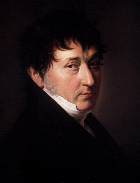
Painter, member of a Spanish family of artists. Pablo González Velázquez (1664-1727) was an Andalusian sculptor who worked in the BaroqueGLOSSARYThe period in art history from about 1600 to about 1750. In this sense the term covers a wide range of styles and artists. In painting and sculpture there were three main forms of Baroque: (1) sumptuous display, a style associated with the Catholic Counter Reformation and the absolutist courts of Europe (Bernini, Rubens); (2) dramatic realism (Caravaggio); and (3) everyday realism, a development seen in particular in Holland (Rembrandt, Vermeer). In architecture, there was an emphasis on expressiveness and grandeur, achieved through scale, the dramatic use of light and shadow, and increasingly elaborate decoration. In a more limited sense the term Baroque often refers to the first of these categories. The development of the Baroque reflects the period's religious tensions (Catholic versus Protestant); a new and more expansive world view based on science and exploration; and the growth of absolutist monarchies. style and in 1702 settled in Madrid, where his three sons were born. There were numerous collaborations between the sons. Luis González Velázquez and Alejandro González Velázquez worked together in Madrid on the chapelGLOSSARYa small separate place for worship, either part of a large church or a separate building. of S Teresa (1737-39) in the church of S José, the church of the convent of El Sacramento, the church of El Salvador and the church of the Carmelitas Descalzas; in La Puebla de Montalbán, near Toledo, they worked together on the Ermita de la Virgen de la Soledad (1741-42), for which they executed the main altarpieceGLOSSARYA picture or sculpture that stands on or is set up behind an altar. The term reredos is used for an ornamental screen or partition, not directly attached to the altar table but affixed to the wall behind it. A diptych is an altarpiece consisting of two panels, a triptych one of three panels, and a polyptych one of four or more panels. From the 14th to 16th century, the altarpiece was one of the most important commissions in European art; it was through the altarpiece that some of the most decisive developments in painting and sculpture came about. and pendentiveGLOSSARYcurving triangular area linking a round dome to the square space below. paintings of Esther, Judith, Rachel and Abigail. The two also often undertook stage designs for the theatre in the Palacio del Buen Retiro in Madrid. They collaborated with their younger brother Antonio González Velázquez on the decoration of the church of the convent of La Visitación (now S Bárbara) in Madrid in 175758, the church of La Encarnación, the church of the Descalzas Reales, the church of the Salesas Reales (where they completed projects begun by Corrado Giaquinto, painting scenes from the Life of the Virgin and Allegories of the Virtues in frescoGLOSSARYWall painting technique in which pigments are applied to wet (fresh) plaster (intonaco). The pigments bind with the drying plaster to form a very durable image. Only a small area can be painted in a day, and these areas, drying to a slightly different tint, can in time be seen. Small amounts of retouching and detail work could be carried out on the dry plaster, a technique known as a secco fresco. on the domeGLOSSARYin architecture, hemispherical structure evolved from the arch, usually forming a ceiling or roof.), the churches of S Isabel and S Ana and the church of SS Justo y Pastor, Madrid. Antonio was the father of Zacarías González Velázquez, the architect Isidro González Velázquez (1765-1829), and Castor González Velázquez.
Zacarías González Velázquez was the son of Antonio González Velázquez. He studied in Mariano Salvador Maella's studio and at the Real Academia de Bellas Artes de San Fernando in Madrid, of which his father was then director. The style of Mariano Salvador Maella, who in 1789 was appointed Pintor de Cámara to King Charles IV, had a profound influence on the young artist's work. Part of his early production includes a number of works for the Real Fábrica de Tapices de Santa Barbara in Madrid, for which he was the last artist to produce tapestryGLOSSARYAs historical climatologists have not shown that Renaissance Italian winters and springs were warmer than they are now, it is puzzling that Italy did not fabricate tapestries to decorate and draught-proof the stony rooms of its palaces until 1545, when Cosimo I set up a manufactory in Florence. To hardiness or stinginess (tapestry was by far the most expensive form of wall decoration) we owe the existence of such secular frescoed decorative schemes as the labours of the months in the castle at Trent (c. 1407), the Arthurian scenes of Pisanello and the courtly ones of Mantegna in the Ducal Palace of Mantua, the delicious calendar fantasies of Cossa and others in the Palazzo Schifanoia in Ferrara - and, doubtless, many others that await liberation from whitewash or later panelling. These are all in situations where northern patrons would have used tapestries. These were imported, chiefly from Flanders, into Italy. The influence of their hunting and ceremonial scenes in particular registered on Italian 'gothic' painting or illumination and stained glass, and in literature. But the Italians did not make them. The most famous of all 'Italian' tapestries, those for the Sistine Chapel designed by Raphael, were made in Brussels from the full-scale coloured patterns, or cartoons, now in the Victoria and Albert Museum, London. Nor is it clear whether imported tapestries were used habitually or simply to add grandeur to special occasions. Even when Cosimo's manufactory was in being, and working from designs by court artists of the calibre of Bronzino, Salviati and Allori, his own headquarters, the Palace of the Signoria (now the Palazzo Vecchio), was being decorated with frescoes. The subject is underexplored. cartoons.
He received several prizes there and was elected to membership of the Academia in 1790, later becoming court painter. In 1819 he became director of painting at the Academia and in 1828 its director-general.