03 — ARTWORK
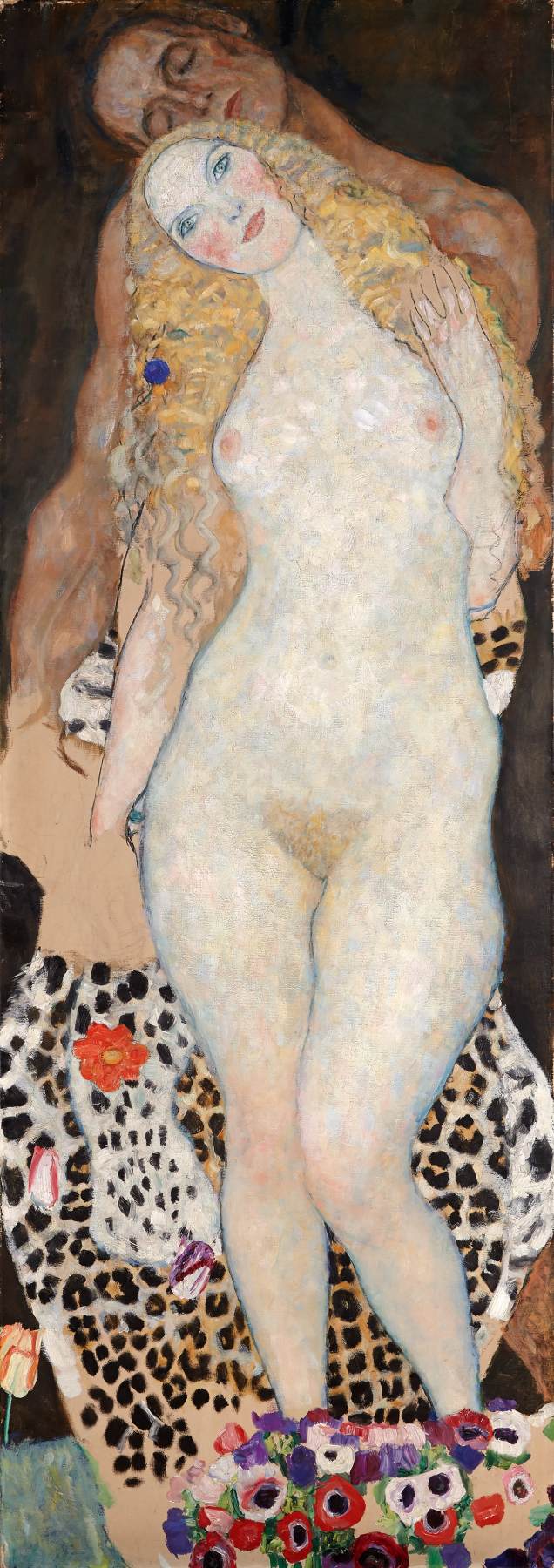
Adam and Eve
- MEDIUM
- Oil on canvas, 173 x 60 cm
- TYPE
- Religious
PALETTE
HOVER OR TAP A SWATCH FOR NAME, SHARE AND HEX. SAMPLED FROM THE IMAGE — INDICATIVE, NOT A PIGMENT ANALYSIS.
DEVELOPMENT BUILD — NOT FOR PUBLIC USE. CONTRIBUTE ON GITHUB.
03 — ARTWORK
PALETTE
HOVER OR TAP A SWATCH FOR NAME, SHARE AND HEX. SAMPLED FROM THE IMAGE — INDICATIVE, NOT A PIGMENT ANALYSIS.
COMMENTARY
UNDERLINED TERMS ARE DEFINED IN THE GLOSSARY.
Adam and Eve c. 1917 Oil on canvasA woven cloth used as a support for painting. The best-quality canvas is made of linen; other materials used are cotton, hemp, and jute. It is now so familiar a material that the word 'canvas' has become almost a synonym for an oil painting, but it was not until around 1500 that it began to rival the wooden panel (which was more expensive and took longer to prepare) as the standard support for movable paintings (the transition came later in Northern Europe than in Italy). Canvas is not suitable for painting on until it has been coated with a ground, which isolates the fabric from the paint; otherwise it will absorb too much paint, only very rough effects will be obtainable, and parts of the fabric may be rotted by the pigments. It must also be made taut on a stretcher or by some other means., 173 x 60 cm Österreichische Galerie Belvedere, Vienna
Klimt's late works reveal a new emphasis on compositional intricacy and elaborate structuring devices which also characterizes his last allegorical paintings, including Leda (1917; destroyed), Adam and Eve (c. 1917 , Belvedere, Vienna) and The Bride (1917-18; Belevedere, Vienna).
@online{wga-re5acbdd1db7104,
  author       = {Krén, Emil and Marx, Daniel},
  title        = {Adam and Eve by KLIMT, Gustav},
  organization = {{Web Gallery of Art}},
  date         = {2026-09-09},
  url          = {https://beta.wga.hu/artists/klimt-gustav-r903df27f14047e/adam-and-eve-re5acbdd1db7104},
  urldate      = {2026-09-09},
  langid       = {english}
}
ACCESSED 2026-09-09. REPLACE THE AUTHOR FIELD WITH THE COMMENTARY AUTHOR WHERE ONE IS NAMED.


