03 — ARTWORK
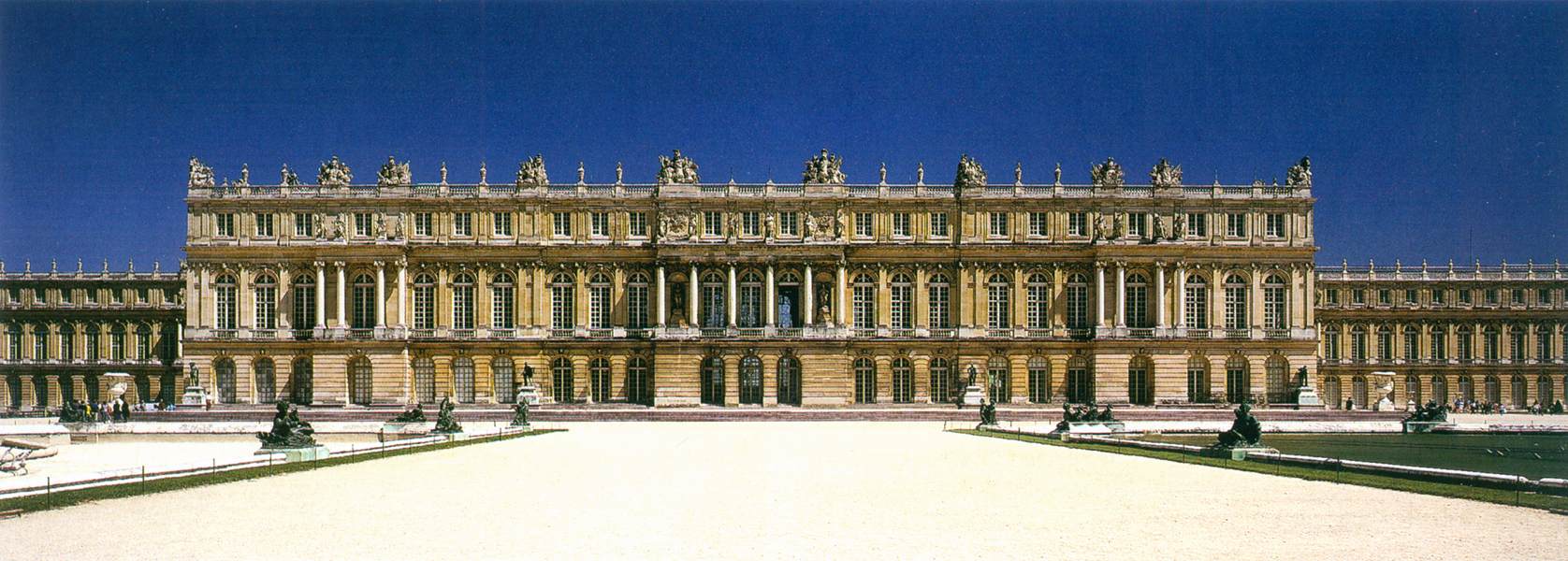
Exterior view
- MEDIUM
- Photo
- TYPE
- Other
PALETTE
HOVER OR TAP A SWATCH FOR NAME, SHARE AND HEX. SAMPLED FROM THE IMAGE — INDICATIVE, NOT A PIGMENT ANALYSIS.
DEVELOPMENT BUILD — NOT FOR PUBLIC USE. CONTRIBUTE ON GITHUB.
03 — ARTWORK
PALETTE
HOVER OR TAP A SWATCH FOR NAME, SHARE AND HEX. SAMPLED FROM THE IMAGE — INDICATIVE, NOT A PIGMENT ANALYSIS.
COMMENTARY
UNDERLINED TERMS ARE DEFINED IN THE GLOSSARY.
Versailles became the ultimate European palace, not only because of its size, splendour, and advanced layout, but also because of the ideal manner in which it expressed absolute power. Versailles was the symbol of timeless domination, the residence of the Sun King, whose life and works of an exemplary nature and were therefore subject to strict regulation and ritual.
The conversion of Louis XIII's small hunting lodge in Versailles had been set in motion by 1668. With Le Vau, Le Brun and Le Nôtre, the king brought in those artists who had already developed significant new concepts at Vaux-le-Vicomte, the palace of his minister Fouquet. The setting of the natural landscape and the concept of "between courtyard and garden" distinguished this new, but much more ambitious extension.
The picture shows the garden façadethe front or principal face of a building, especially one elaborately constructed; a blind façade is a façade that is purely decorative and does not relate to the structure of the building. of the palace.
@online{wga-rc5c0cfb03e233f,
  author       = {Krén, Emil and Marx, Daniel},
  title        = {Exterior view by LE VAU, Louis},
  organization = {{Web Gallery of Art}},
  date         = {2026-09-13},
  url          = {https://beta.wga.hu/artists/le-vau-louis-r413bb0a0edb96f/exterior-view-rc5c0cfb03e233f},
  urldate      = {2026-09-13},
  langid       = {english}
}
ACCESSED 2026-09-13. REPLACE THE AUTHOR FIELD WITH THE COMMENTARY AUTHOR WHERE ONE IS NAMED.


