03 — ARTWORK
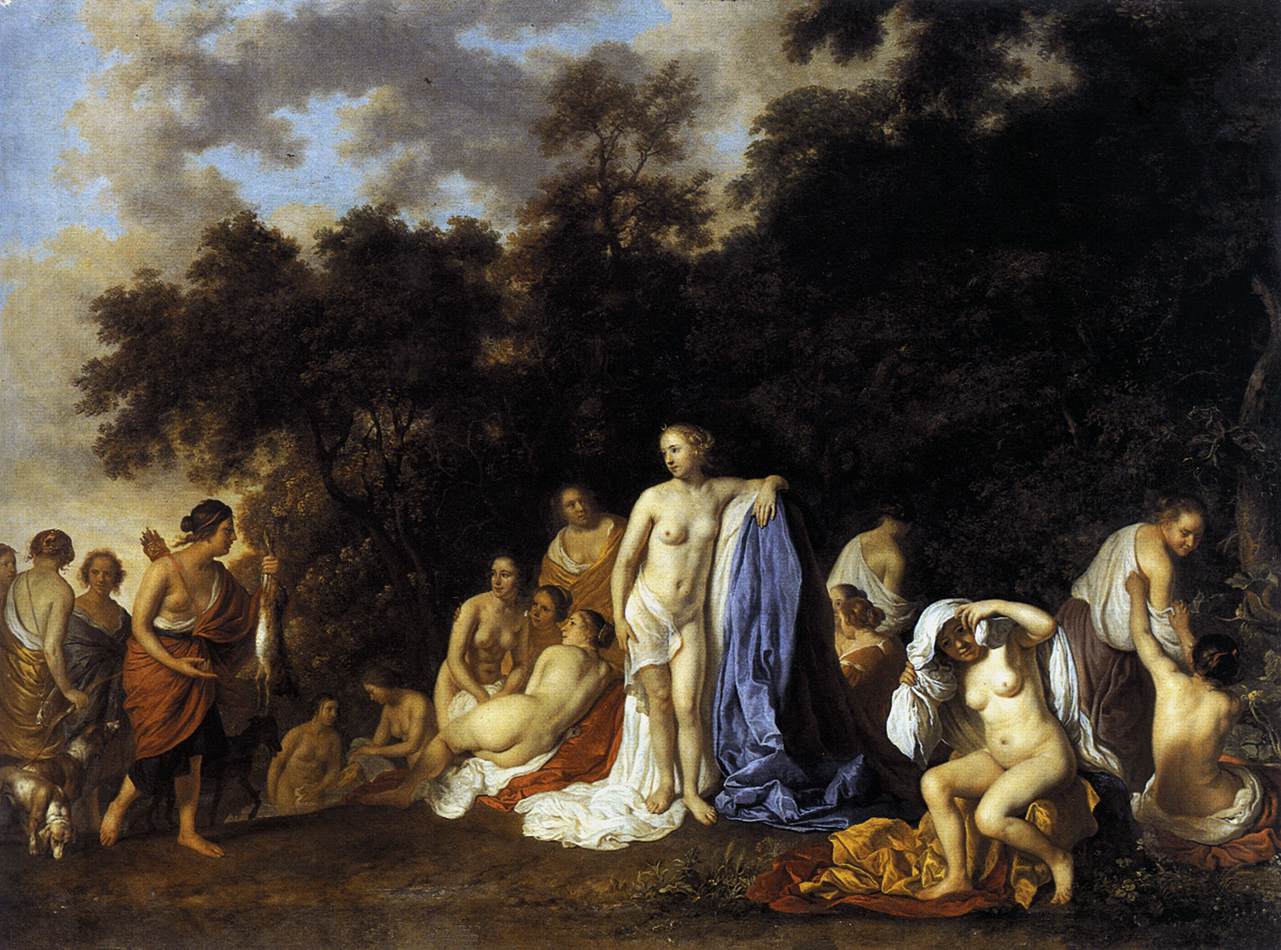
Diana and Her Nymphs
- MEDIUM
- Oil on canvas, 100 x 136 cm
- TYPE
- Mythological
PALETTE
HOVER OR TAP A SWATCH FOR NAME, SHARE AND HEX. SAMPLED FROM THE IMAGE — INDICATIVE, NOT A PIGMENT ANALYSIS.
DEVELOPMENT BUILD — NOT FOR PUBLIC USE. CONTRIBUTE ON GITHUB.
03 — ARTWORK
PALETTE
HOVER OR TAP A SWATCH FOR NAME, SHARE AND HEX. SAMPLED FROM THE IMAGE — INDICATIVE, NOT A PIGMENT ANALYSIS.
COMMENTARY
UNDERLINED TERMS ARE DEFINED IN THE GLOSSARY.
Diana, the goddess of the hunt, and her nymphs are assembling in a glade in a large wood. The sparsely-clad Diana stands in the centre of the composition, leaning against a tree trunk covered with drapery, in a pose reminiscent of classicalRelating to the culture of ancient Greece and Rome (classical Antiquity). The classical world played a profoundly important role in the Renaissance, with Italian scholars, writers, and artists seeing their own period as the rebirth (the "renaissance") of classical values after the Middle Ages. The classical world was considered the golden age for the arts, literature, philosophy, and politics. Concepts of the classical, however, changed greatly from one period to the next. Roman literature provided the starting point in the 14th century, scholars patiently finding, editing and translating a wide range of texts. In the 15th century Greek literature, philosophy and art - together with the close study of the remains of Roman buildings and sculptures-expanded the concept of the classical and ensured it remained a vital source of ideas and inspiration. sculptures. She is identified by her attributeA symbolic object which is conventionally used to identify a particular person, usually a saint. In the case of martyrs, it is usually the nature of their martyrdom., the crescent moon on her brow. Nymphs with a hunting dog approach from the left. The woman in front has a quiver slung over her shoulder and displays the trophy, a hare, which she holds by the ears. Some of Diana's attendants are bathing; others have emerged from the water and are putting on their robes. The one who stands out most is the naked woman in the right foreground holding a garment over her head and contemplating the observer.
Although the painting ostensibly illustrates a mythological tale, it is in fact an idyllic parade of nude or semi-nude women in a variety of poses, which evokes a classicist mood reminiscent of the French masters Poussin and Claude Lorrain.
@online{wga-rd905fbd3d846fd,
  author       = {Krén, Emil and Marx, Daniel},
  title        = {Diana and Her Nymphs by LOO, Jacob van},
  organization = {{Web Gallery of Art}},
  date         = {2026-09-13},
  url          = {https://beta.wga.hu/artists/loo-jacob-van-rf6937a4f4e0375/diana-and-her-nymphs-rd905fbd3d846fd},
  urldate      = {2026-09-13},
  langid       = {english}
}
ACCESSED 2026-09-13. REPLACE THE AUTHOR FIELD WITH THE COMMENTARY AUTHOR WHERE ONE IS NAMED.


