03 — ARTWORK
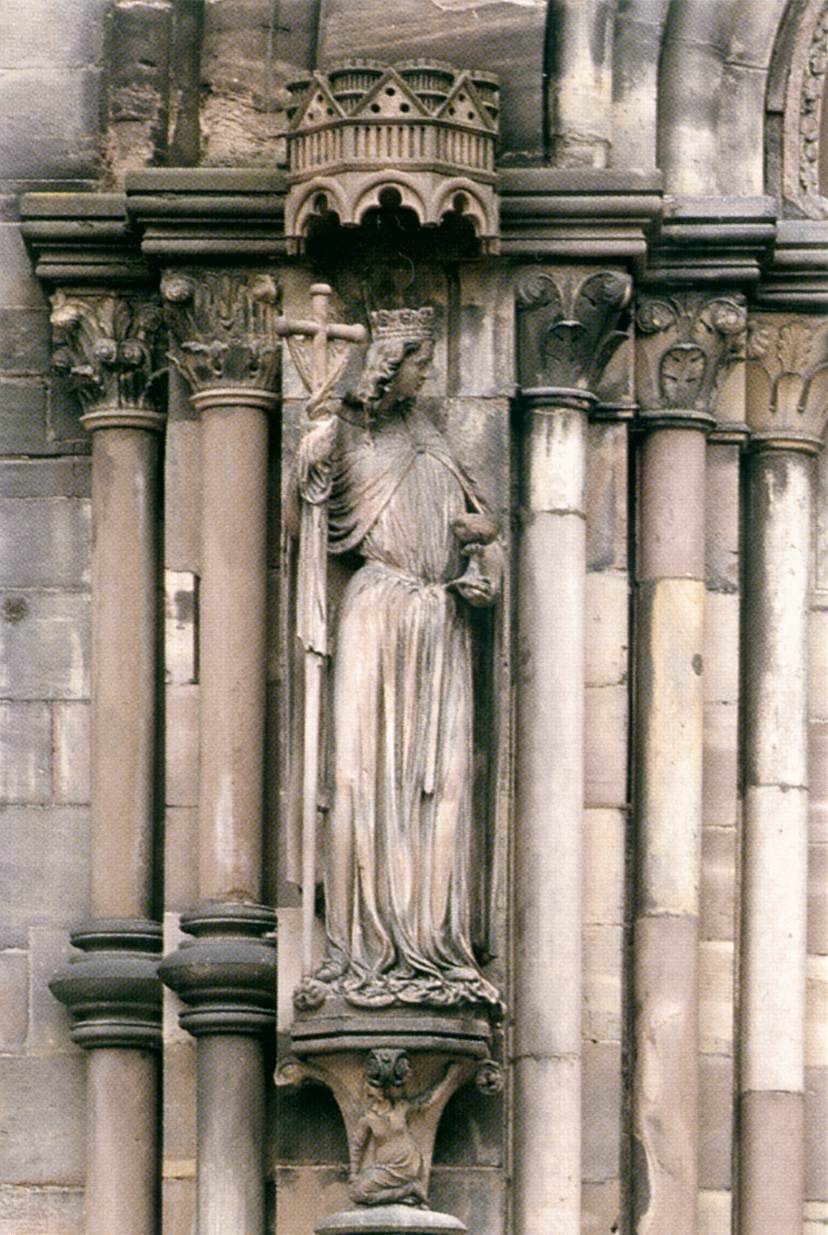
Ecclesia
MEDIEVAL SCULPTOR, German · 1230 →
- MEDIUM
- Stone
- TYPE
- Religious
PALETTE
HOVER OR TAP A SWATCH FOR NAME, SHARE AND HEX. SAMPLED FROM THE IMAGE — INDICATIVE, NOT A PIGMENT ANALYSIS.
DEVELOPMENT BUILD — NOT FOR PUBLIC USE. CONTRIBUTE ON GITHUB.
03 — ARTWORK
MEDIEVAL SCULPTOR, German · 1230 →
PALETTE
HOVER OR TAP A SWATCH FOR NAME, SHARE AND HEX. SAMPLED FROM THE IMAGE — INDICATIVE, NOT A PIGMENT ANALYSIS.
COMMENTARY
UNDERLINED TERMS ARE DEFINED IN THE GLOSSARY.
The double portala doorway. A portal recessed in several steps was frequently used in Romanesque architecture; this meant that the often relatively small entrance was given considerable emphasis on the façade. (south portal) is flanked by the allegorical figures of Ecclesia (the Church) on the right and Synagoga on the left. These figures, whose originals are preserved in the Musée de l'OeuvreThe complete body of works created by an artist. Notre-Dame in Strasbourg, have been replaced by copies.
The two female figures on the south portal of the Strasbourg CathedralThe principal church of a province or diocese, where the throne of the bishop is placed. For reasons lost to time and tradition, a cathedral always faces west - toward the setting sun. The altar is placed at the east end. The main body, or nave, of the cathedral is usually divided into one main and two side aisles. These lead up to the north and south transepts, or arms of the cross, the shape in which a cathedral is usually formed. allegorically represent Christianity and Judaism. In Medieval iconographyThe systematic study and identification of the subject-matter and symbolism of art works, as opposed to their style; the set of symbolic forms on which a given work is based. Originally, the study and identification of classical portraits. Renaissance art drew heavily on two iconographical traditions: Christianity, and ancient Greek and Roman art, thought and literature. they were usually shown as engaged in a dispute in which Synagoga, the personificationan imaginary person conceived as representing a thing, concept or deity. of Judaism, was the inferior and was shown vanquished. Most unusually, however, the figures at Strasbourg turn toward each other and toward the central figure of the double portal, Solomon. Thus the conflict is reinterpreted and given a conciliatory outcome.
The figure of Ecclesia, standing almost stiffly upright, wears a crown. The cross and chaliceA cup used in the celebration of the Christian Eucharist. Both the statement of St. Paul about "the cup of blessing which we bless" (1 Corinthians 10:16) and the accounts of the institution of the Eucharist in the first three Gospels indicate that special rites of consecration attended the use of the chalice from the beginning. It was not until the recognition of Christianity by the Roman Empire in the 4th century that silver and gold became the usual materials for the chalice. In the Middle Ages the legend of the Holy Grail surrounded the origins of the eucharistic chalice with a magical aura. The precious stones and elaborate carvings employed for the embellishment of chalices have made them an important part of the history of ecclesiastical art. are replacements, but these attributes seem insignificant compared with the figure's majestic appearance. She turns to speak her final words to Synagoga, while the latter, already turning toward her opponent, will maintain her attitude of rejection only for a few moments more. She still holds the broken staff and the Tablets of the Law, and turns away, blindfolded, because she has not yet recognized the revelation of Jesus Christ.
@online{wga-r2aadfa48aed232,
  author       = {Krén, Emil and Marx, Daniel},
  title        = {Ecclesia by MEDIEVAL SCULPTOR, German},
  organization = {{Web Gallery of Art}},
  date         = {2026-09-13},
  url          = {https://beta.wga.hu/artists/medieval-sculptor-german-rccf31ad7035f2a/ecclesia-r2aadfa48aed232},
  urldate      = {2026-09-13},
  langid       = {english}
}
ACCESSED 2026-09-13. REPLACE THE AUTHOR FIELD WITH THE COMMENTARY AUTHOR WHERE ONE IS NAMED.


