03 — ARTWORK
Portal
- MEDIUM
- Photo
- TYPE
- Other
PALETTE
HOVER OR TAP A SWATCH FOR NAME, SHARE AND HEX. SAMPLED FROM THE IMAGE — INDICATIVE, NOT A PIGMENT ANALYSIS.
DEVELOPMENT BUILD — NOT FOR PUBLIC USE. CONTRIBUTE ON GITHUB.
03 — ARTWORK
PALETTE
HOVER OR TAP A SWATCH FOR NAME, SHARE AND HEX. SAMPLED FROM THE IMAGE — INDICATIVE, NOT A PIGMENT ANALYSIS.
COMMENTARY
UNDERLINED TERMS ARE DEFINED IN THE GLOSSARY.
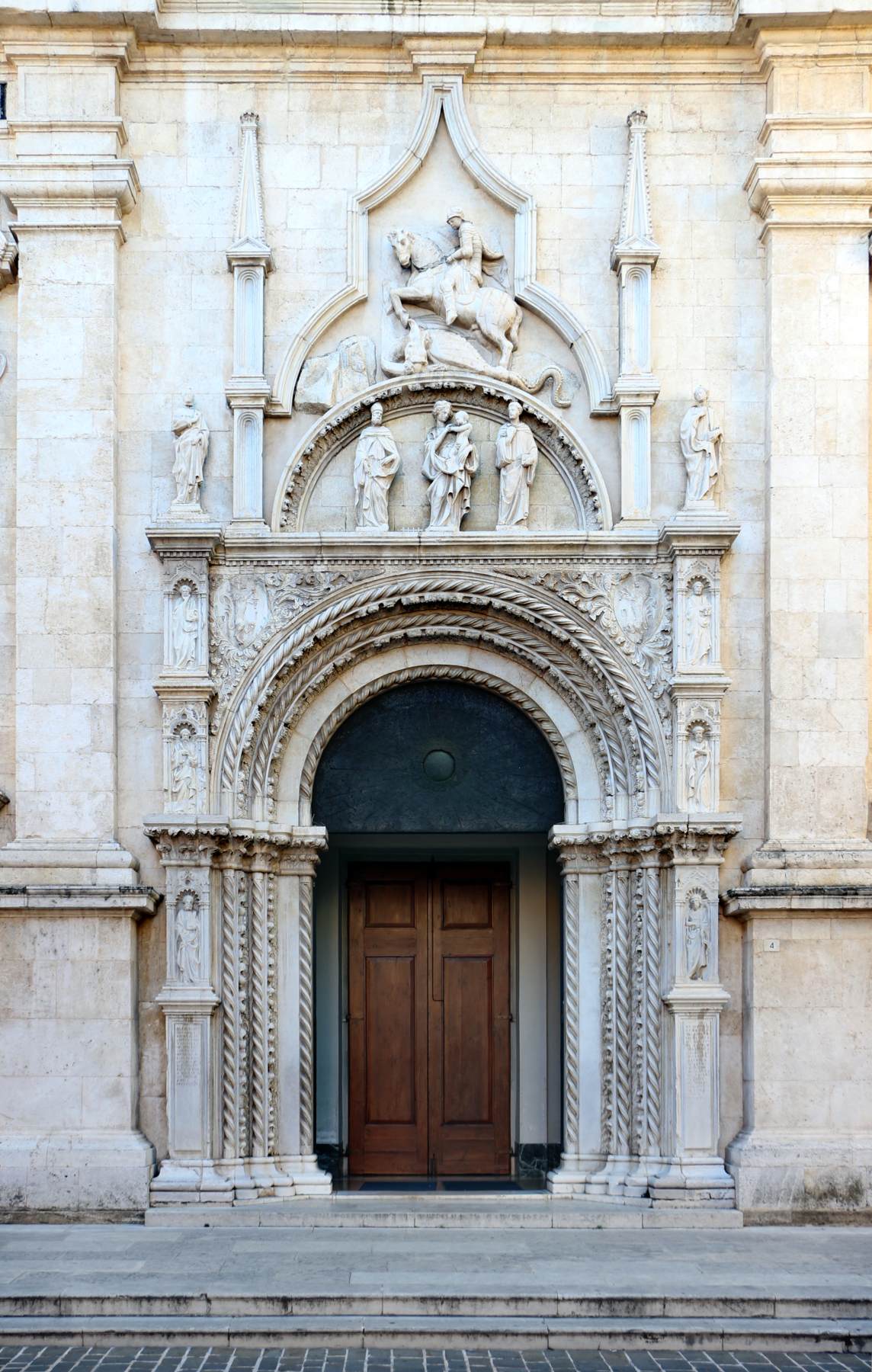
Nanni di Bartolo was in the Veneto again in 1435, as is shown by the inscription over the portala doorway. A portal recessed in several steps was frequently used in Romanesque architecture; this meant that the often relatively small entrance was given considerable emphasis on the façade. of San Nicola at Tolentino, erected by him. It seems, however, that his role there was limited to assembling various pieces of statuary, which had been carved by other artists in the Veneto and brought to Tolentino by the brother of the condottiereLeader of a band of mercenaries engaged to fight in numerous wars among the Italian states from the mid-14th to the 16th century. The name was derived from the condotta, or "contract," by which the condottieri put themselves in the service of a city or of a lord. The first mercenary armies in Italy (often called free companies) were made up of foreigners. The earliest (1303) was composed of Catalans who had fought in the dynastic wars of the south. In the mid-14th century the Grand Company, composed mainly of Germans and Hungarians, terrorized the country, devastating Romagna, Umbria, and Tuscany. It was one of the first to have a formal organization and a strict code of discipline, developed by the Provençal adventurer Montréal d' Albarno. The Englishman Sir John Hawkwood, one of the most famous of the non-Italian condottieri, came to Italy in the 1360s during a lull in the Hundred Years' War and for the next 30 years led the White Company in the confused wars of northern Italy. By the end of the 14th century, Italians began to raise mercenary armies, and soon condottieri were conquering principalities for themselves. The organization of the companies was perfected in the early 15th century by Muzio Attendolo Sforza, in the service of Naples, and his rival Braccio da Montone, in the service of Perugia. Muzio's son, Francesco Sforza, who won control of Milan in 1450, was one of the most successful of all the condottieri. Less fortunate was another great condottiere, Carmagnola, who first served one of the viscounts of Milan and then conducted the wars of Venice against his former masters but at last awoke the suspicion of the Venetian oligarchy and was put to death before the palace of St. Mark (1432). Toward the end of the 15th century, when the large cities had gradually swallowed up the small states and Italy itself was drawn into the general current of European politics and became the battlefield of powerful armies--French, Spanish, and German--the condottieri, who proved unequal to the gendarmery of France and the improved Italian troops, disappeared. The soldiers who fought under the condottieri were almost entirely heavy-armoured cavalry and were noted for their rapacious and disorderly behaviour. With no goal beyond personal gain, the armies of the condottieri often changed sides, and their battles often resulted in little bloodshed. Niccolò da Tolentino after the latter's death in 1435.
The Virgin and Child and the two saints in the lunetteIn architecture, a semicircular space, such as that over a door or window or in a vaulted roof, that may contain a window, painting or sculptural decoration. show the influence of Jacopo della Quercia and have been attributed to Nanni, but they bear no stylistic relationship to his certain works.
@online{wga-rf144e609d285c3,
  author       = {Krén, Emil and Marx, Daniel},
  title        = {Portal by NANNI DI BARTOLO},
  organization = {{Web Gallery of Art}},
  date         = {2026-09-13},
  url          = {https://beta.wga.hu/artists/nanni-di-bartolo-rbd381a067de1e4/portal-rf144e609d285c3},
  urldate      = {2026-09-13},
  langid       = {english}
}
ACCESSED 2026-09-13. REPLACE THE AUTHOR FIELD WITH THE COMMENTARY AUTHOR WHERE ONE IS NAMED.


