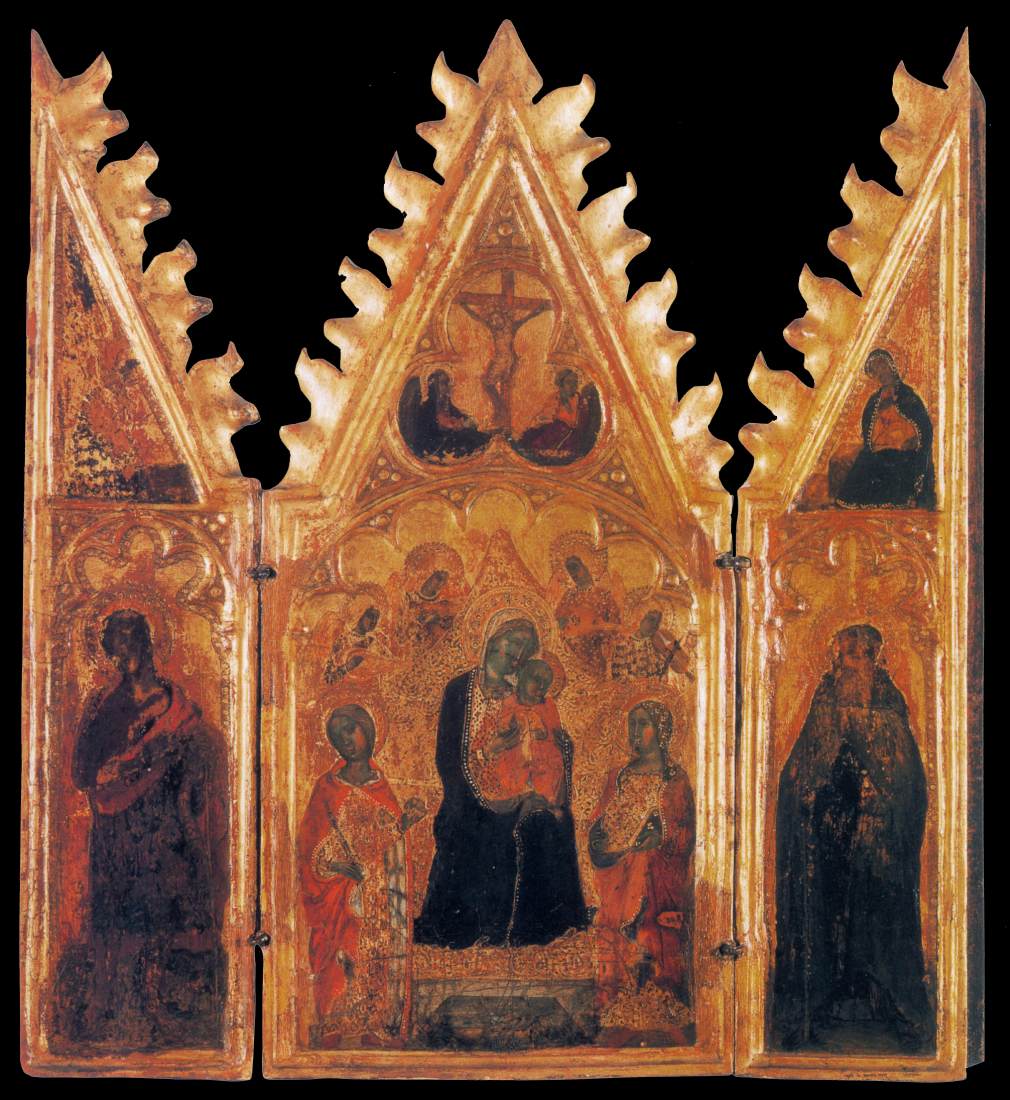
TriptychA painting in three sections, usually an altarpiece, consisting of a central panel and two outer panels, or wings. In many medieval triptychs the two outer wings were hinged so that could be closed over the center panel. Early triptychs were often portable. c. 1380 TemperaA method of painting in which the pigments are mixed with an emulsion of water and egg yolks or whole eggs (sometimes glue or milk). Tempera was widely used in Italian art in the 14th and 15th centuries, both for panel painting and fresco, then being replaced by oil paint. Tempera colors are bright and translucent, though because the paint dried very quickly there is little time to blend them, graduated tones being created by adding lighter or darker dots or lines of color to an area of dried paint. on wood, 44 x 19 cm (central), 44 x 9 cm (each wing) Christian Museum, Esztergom
This triptych is a characteristic example of the altarpieces created for private devotion in the second half of the fourteenth century. In the centre the enthroned Virgin is depicted with two female saints and four angel musicians. On the side wings St John the Baptist and St Anthony the Hermit are represented. The upper part contains the Crucifix (in the centre) and the Annunciationthe term for the event described in the Gospel according to St. Luke, when the Angel Gabriel brings the Virgin Mary the news that she is to bear her son, Jesus Christ. The Annunciation was among the most widespread pictorial subjects of European art during the Middle Ages and the Renaissance. (on the side wings).
The triptych is in a very poor state of preservation, the painted surface is strongly damaged.