03 — ARTWORK
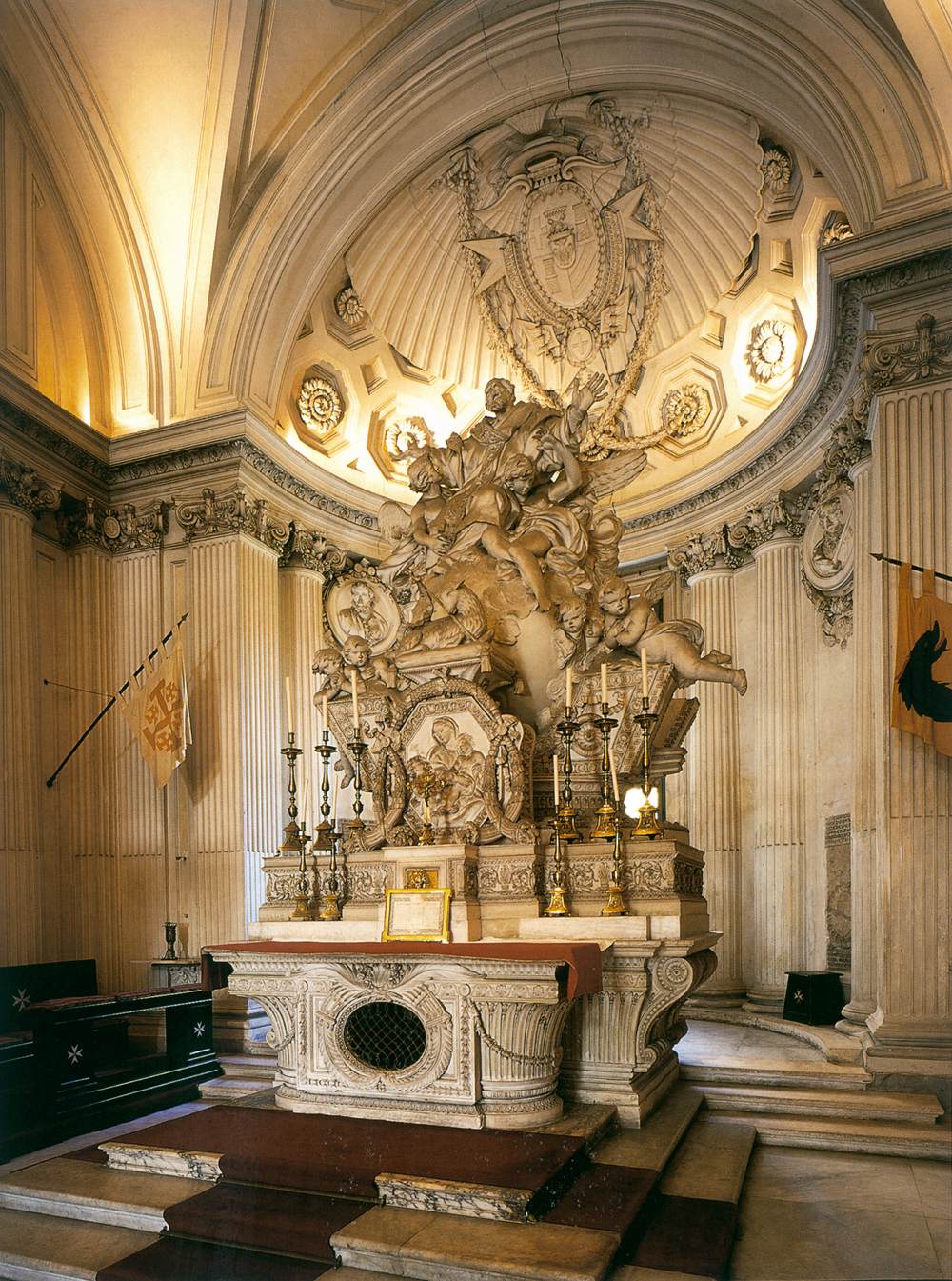
Interior view
PIRANESI, Giovanni Battista · 1768 →
- MEDIUM
- Photo
- TYPE
- Interior
PALETTE
HOVER OR TAP A SWATCH FOR NAME, SHARE AND HEX. SAMPLED FROM THE IMAGE — INDICATIVE, NOT A PIGMENT ANALYSIS.
DEVELOPMENT BUILD — NOT FOR PUBLIC USE. CONTRIBUTE ON GITHUB.
03 — ARTWORK
PIRANESI, Giovanni Battista · 1768 →
PALETTE
HOVER OR TAP A SWATCH FOR NAME, SHARE AND HEX. SAMPLED FROM THE IMAGE — INDICATIVE, NOT A PIGMENT ANALYSIS.
COMMENTARY
UNDERLINED TERMS ARE DEFINED IN THE GLOSSARY.
It was the work of Piranesi, the most dazzling artist of his age, which demonstrated how architecture and city were viewed during the transition from the late BaroqueThe period in art history from about 1600 to about 1750. In this sense the term covers a wide range of styles and artists. In painting and sculpture there were three main forms of Baroque: (1) sumptuous display, a style associated with the Catholic Counter Reformation and the absolutist courts of Europe (Bernini, Rubens); (2) dramatic realism (Caravaggio); and (3) everyday realism, a development seen in particular in Holland (Rembrandt, Vermeer). In architecture, there was an emphasis on expressiveness and grandeur, achieved through scale, the dramatic use of light and shadow, and increasingly elaborate decoration. In a more limited sense the term Baroque often refers to the first of these categories. The development of the Baroque reflects the period's religious tensions (Catholic versus Protestant); a new and more expansive world view based on science and exploration; and the growth of absolutist monarchies. to the early Neo-classicalRelating to the culture of ancient Greece and Rome (classical Antiquity). The classical world played a profoundly important role in the Renaissance, with Italian scholars, writers, and artists seeing their own period as the rebirth (the "renaissance") of classical values after the Middle Ages. The classical world was considered the golden age for the arts, literature, philosophy, and politics. Concepts of the classical, however, changed greatly from one period to the next. Roman literature provided the starting point in the 14th century, scholars patiently finding, editing and translating a wide range of texts. In the 15th century Greek literature, philosophy and art - together with the close study of the remains of Roman buildings and sculptures-expanded the concept of the classical and ensured it remained a vital source of ideas and inspiration. style.
Piranesi's representations of city and architecture were theatrical. Drama and poetry were the main themes of his engravings, the main subjects of which were his famous picturesqueTerm covering a set of attitudes towards landscape, both real and painted, that flourished in the late 18th and early 19th centuries. It indicated an aesthetic approach that found pleasure in roughness and irregularity, and an attempt was made to establish it as a critical category between the 'beautiful' and the 'Sublime'. Picturesque scenes were thus neither serene (like the beautiful) nor awe-inspiring (like the Sublime), but full of variety, curious details, and interesting textures — medieval ruins were quintessentially Picturesque. Natural scenery tended to be judged in terms of how closely it approximated to the paintings of favoured artists such as Gaspard Dughet, and in 1801 the Supplement to Samuel Johnson's Dictionary by George Mason defined 'Picturesque as: 'what pleases the eye; remarkable for singularity; striking the imagination with the force of painting; to be expressed in painting; affording a good subject for a landscape; proper to take a landscape from.' The Picturesque Tour in search of suitable subjects was a feature of English landscape painting of the period, exemplified, for example, in the work of Girtin and (early in his career) of Turner, and the Picturesque generated a large literary output; much of it was pedantic and obsessive and it became a popular subject for satire. ruins. The approach and technique were essentially those of a late Baroque artist. This was demonstrated in the exaggerated proportions and the predominance of the diagonals reflecting the influence of the diagonal stage. His work as an architect was similar, particularly his plans for Santa Maria del Priorato. The square and the garden maze designed for the richly decorated church façadethe front or principal face of a building, especially one elaborately constructed; a blind façade is a façade that is purely decorative and does not relate to the structure of the building., the interior, and, above all, the altar provide a series of bizarre compositions drawn from archeological finds and following almost incidentally on from each other. Their settings are, however, highly effective.
The picture shows the altar.
@online{wga-re19fa4a97159d1,
  author       = {Krén, Emil and Marx, Daniel},
  title        = {Interior view by PIRANESI, Giovanni Battista},
  organization = {{Web Gallery of Art}},
  date         = {2026-09-13},
  url          = {https://beta.wga.hu/artists/piranesi-giovanni-battista-rf1bb0a837c170f/interior-view-re19fa4a97159d1},
  urldate      = {2026-09-13},
  langid       = {english}
}
ACCESSED 2026-09-13. REPLACE THE AUTHOR FIELD WITH THE COMMENTARY AUTHOR WHERE ONE IS NAMED.


