03 — ARTWORK
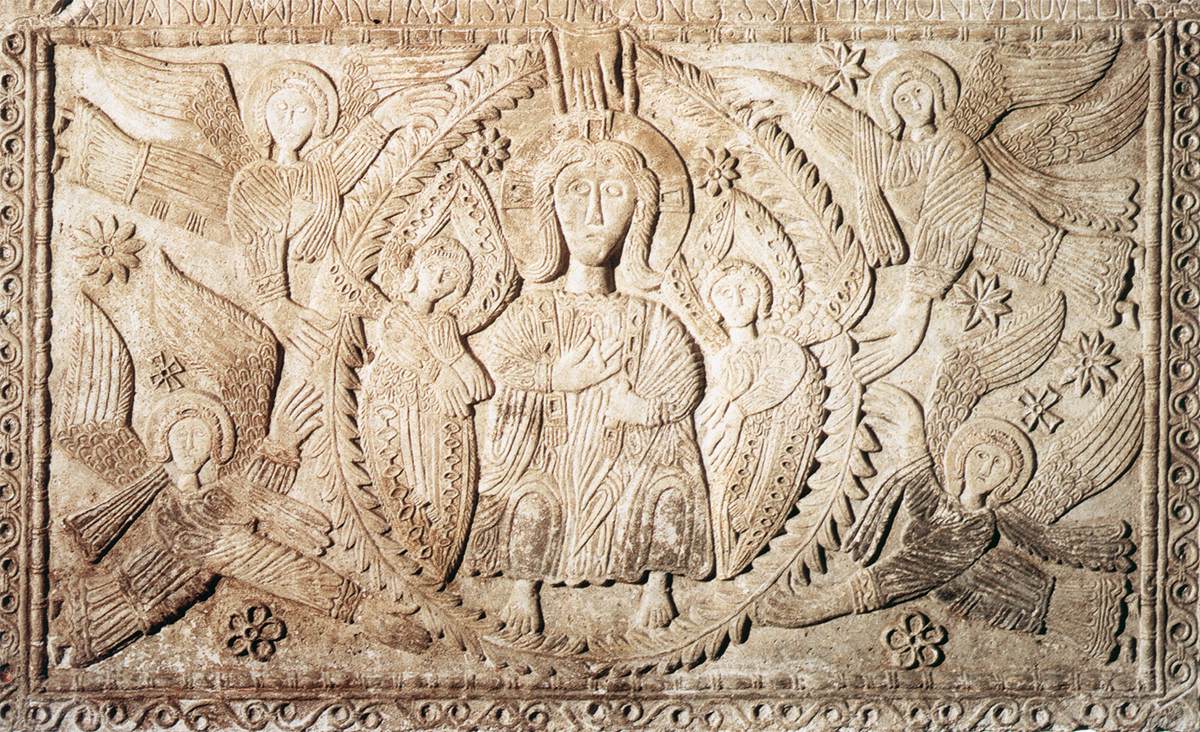
Altar of Duke Ratchis (front)
PRE-ROMANESQUE SCULPTOR, Italian · 744 →
- MEDIUM
- Carsic stone
- TYPE
- Religious
PALETTE
HOVER OR TAP A SWATCH FOR NAME, SHARE AND HEX. SAMPLED FROM THE IMAGE — INDICATIVE, NOT A PIGMENT ANALYSIS.
DEVELOPMENT BUILD — NOT FOR PUBLIC USE. CONTRIBUTE ON GITHUB.
CURRENT LOCATION · Christian Museum and Treasury
03 — ARTWORK
PRE-ROMANESQUE SCULPTOR, Italian · 744 →
PALETTE
HOVER OR TAP A SWATCH FOR NAME, SHARE AND HEX. SAMPLED FROM THE IMAGE — INDICATIVE, NOT A PIGMENT ANALYSIS.
COMMENTARY
UNDERLINED TERMS ARE DEFINED IN THE GLOSSARY.
Ratchis was the Duke of Friuli (739-744) and King of the Lombards (744-749). He ruled in peace until he besieged, for reasons unknown, Perugia. Pope Zachary convinced him to lift the siege and he abdicated and entered, with his family, the abbey of Montecassino. After the death of Aistulf in 756, he tried once again to reign over the Lombards, but he was defeated by Desiderius and retired to a cloisterquadrilateral enclosure surrounded by covered walkways, the centre of activity for the inhabitants of a monastery..
The picture shows the front of the altar with the depiction of Christ in Majesty. This reliefA sculptural work in which all or part projects from the flat surface. There are three basic forms: low relief (bas-relief, basso rilievo), in which figures project less than half their depth from the background; medium relief (mezzo-rilievo), in which figures are seen half round; and high relief (alto rilievo), in which figures are almost detached from their background. is a typical example of the Lombard decoration style.
@online{wga-r57cd2978b4852b,
  author       = {Krén, Emil and Marx, Daniel},
  title        = {Altar of Duke Ratchis (front) by PRE-ROMANESQUE SCULPTOR, Italian},
  organization = {{Web Gallery of Art}},
  date         = {2026-09-13},
  url          = {https://beta.wga.hu/artists/pre-romanesque-sculptor-italian-r3df075e1a3fa22/altar-of-duke-ratchis-front-r57cd2978b4852b},
  urldate      = {2026-09-13},
  langid       = {english}
}
ACCESSED 2026-09-13. REPLACE THE AUTHOR FIELD WITH THE COMMENTARY AUTHOR WHERE ONE IS NAMED.


