03 — ARTWORK
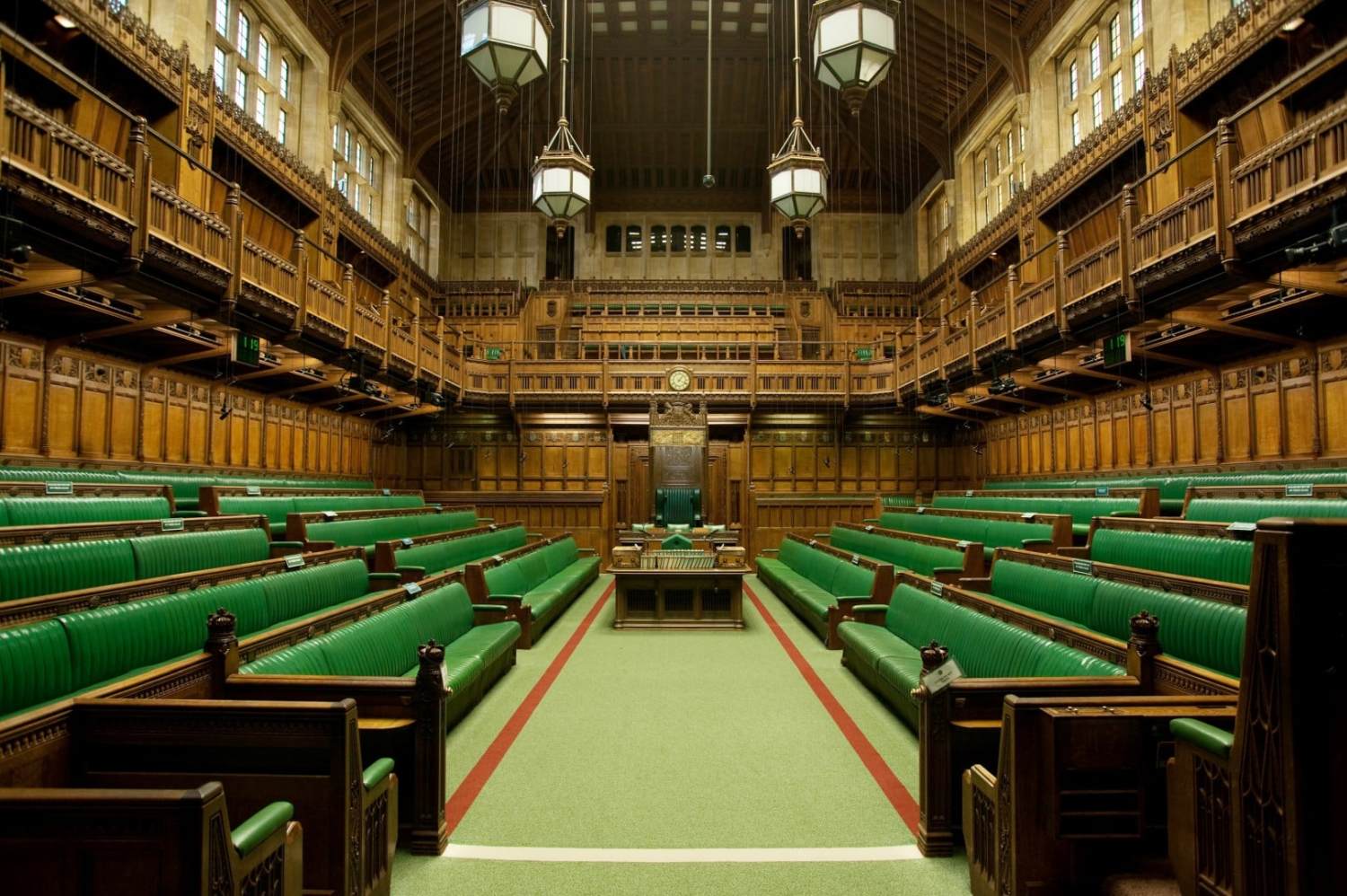
Interior view
PUGIN, Augustus Welby Northmore →
- MEDIUM
- Photo
- TYPE
- Other
PALETTE
HOVER OR TAP A SWATCH FOR NAME, SHARE AND HEX. SAMPLED FROM THE IMAGE — INDICATIVE, NOT A PIGMENT ANALYSIS.
DEVELOPMENT BUILD — NOT FOR PUBLIC USE. CONTRIBUTE ON GITHUB.
03 — ARTWORK
PUGIN, Augustus Welby Northmore →
PALETTE
HOVER OR TAP A SWATCH FOR NAME, SHARE AND HEX. SAMPLED FROM THE IMAGE — INDICATIVE, NOT A PIGMENT ANALYSIS.
COMMENTARY
UNDERLINED TERMS ARE DEFINED IN THE GLOSSARY.
Pugin's collaboration with Barry at the Houses of Parliament produced some of his greatest achievements. Barry realized that he needed Pugin's knowledge of medieval detail and ability to make rich and vivid designs in order to give life to the interior of his great building. Barry remained in ultimate control of the project, with Pugin revising his designs to meet Barry's ideas of perfection. Barry protected Pugin's position by preventing the Treasury from putting the decorative work out to tender. He thus enabled Pugin to work with his friends, who could interpret his hasty drawings: Hardman, who manufactured the brasswork and stained glass; Crace, whose firm provided decorative painting and supplied wallpapers and some furniture; and Minton, who manufactured the encaustic tiles.
Their work started with the interior of the House of Lords, planned to be the climax of the building. All the fittings, with the exception of the frescoes and statues, are Pugin's work and survive largely unaltered, except for the stained glass, which was destroyed in World War II. The setting for the throne is particularly successful and magnificent: the immense amount of detail is controlled by strong and clear linear patterns in deep colours. After the House of Lords, Pugin continued to work on the interiors, including the House of Commons (destroyed 1941), which was finally opened in 1852. He designed great numbers of objects, both large and small, drawing on his experience to create a whole range of items, such as umbrella-stands and gas-lamps, which had no direct medieval precedent.
Among individual masterpieces are the brass doors of the House of Lords, the encaustic pavement in the Central Lobby and the octagonal tables and X-frame chairs in the Prince's Chamber. Barry valued Pugin greatly, and although his work was limited to the interiors, it seems most probable that Pugin suggested to Barry the example of his clock-tower at Scarisbrick Hall, with its projecting clock storey, as the prototype for the Clock Tower at Westminster. The two men worked together in harmony, a splendid combination of Barry's judgement and Pugin's imagination.
Pugin died before the building was complete, but his style was continued. Sadly, however, the sons Alfred Barry (1826-1910) and Edward Welby Pugin (1834-1875) quarrelled over their fathers' respective contributions to the building. It is undoubtedly true that Pugin was not given his due at the Houses of Parliament until well into the 20th century.
The photo shows the Commons Chamber.
@online{wga-r7d8d4bed0b7b32,
  author       = {Krén, Emil and Marx, Daniel},
  title        = {Interior view by PUGIN, Augustus Welby Northmore},
  organization = {{Web Gallery of Art}},
  date         = {2026-09-09},
  url          = {https://beta.wga.hu/artists/pugin-augustus-welby-northmore-r12b29ce81f4f04/interior-view-r7d8d4bed0b7b32},
  urldate      = {2026-09-09},
  langid       = {english}
}
ACCESSED 2026-09-09. REPLACE THE AUTHOR FIELD WITH THE COMMENTARY AUTHOR WHERE ONE IS NAMED.


