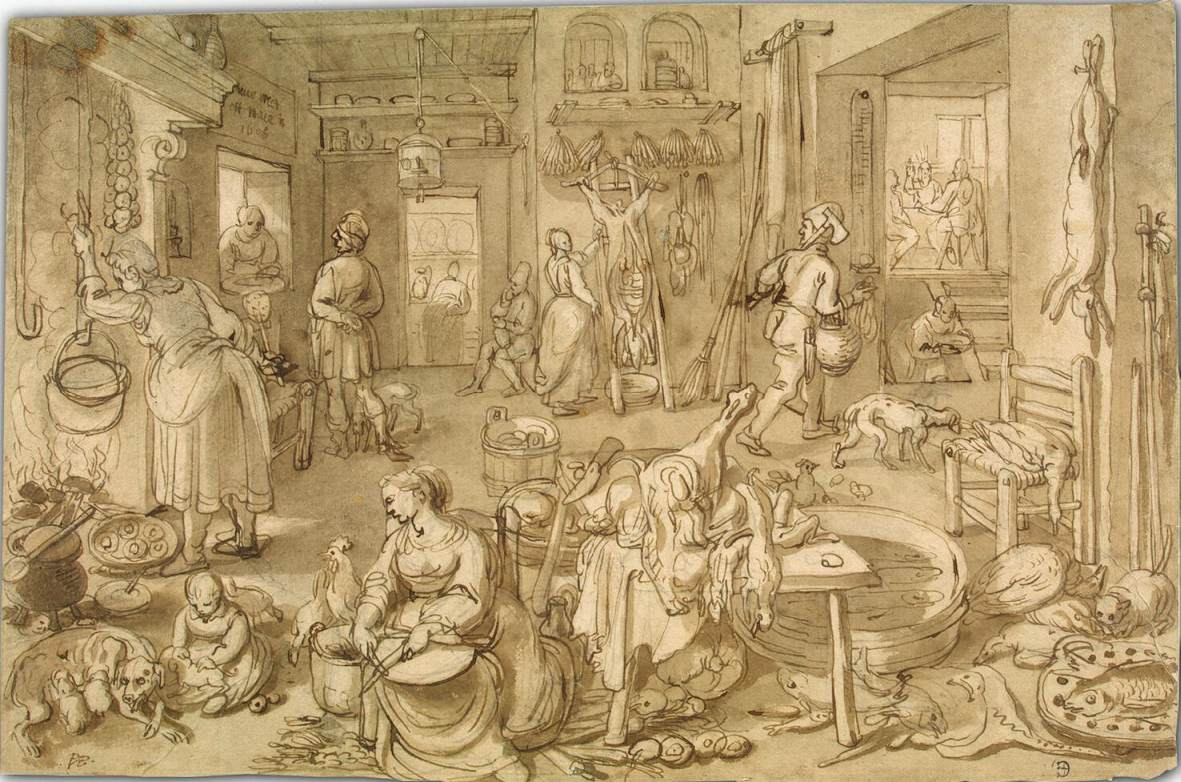
Kitchen Scene with the Supper at Emmaus 1605 Pen and brown inkColoured fluid used for writing, drawing, or printing. Inks usually have staining power without body, but printers' inks are pigments mixed with oil and varnish, and are opaque. The use of inks goes back in China and Egypt to at least 2500 BC. They were usually made from lampblack (a pigment made from soot) or a red ochre ground into a solution of glue or gums. These materials were moulded into dry sticks or blocks, which were then mixed with water for use. Ink brought from China or Japan in such dry form came to be known in the West as 'Chinese ink' or 'Indian ink'. The names are also given to a similar preparation made in Europe., brown wash, over lead pencil, 267 x 419 mm The Hermitage, St. Petersburg
This drawing represents the sumptuous kitchen of a wealthy household. In the right background the artist depicts the scene Supper at Emmaus. Christ is shown with his hand raised in blessing, just before the moment of recognition.
The drawing was in the collection of Catherine the Great.