03 — ARTWORK
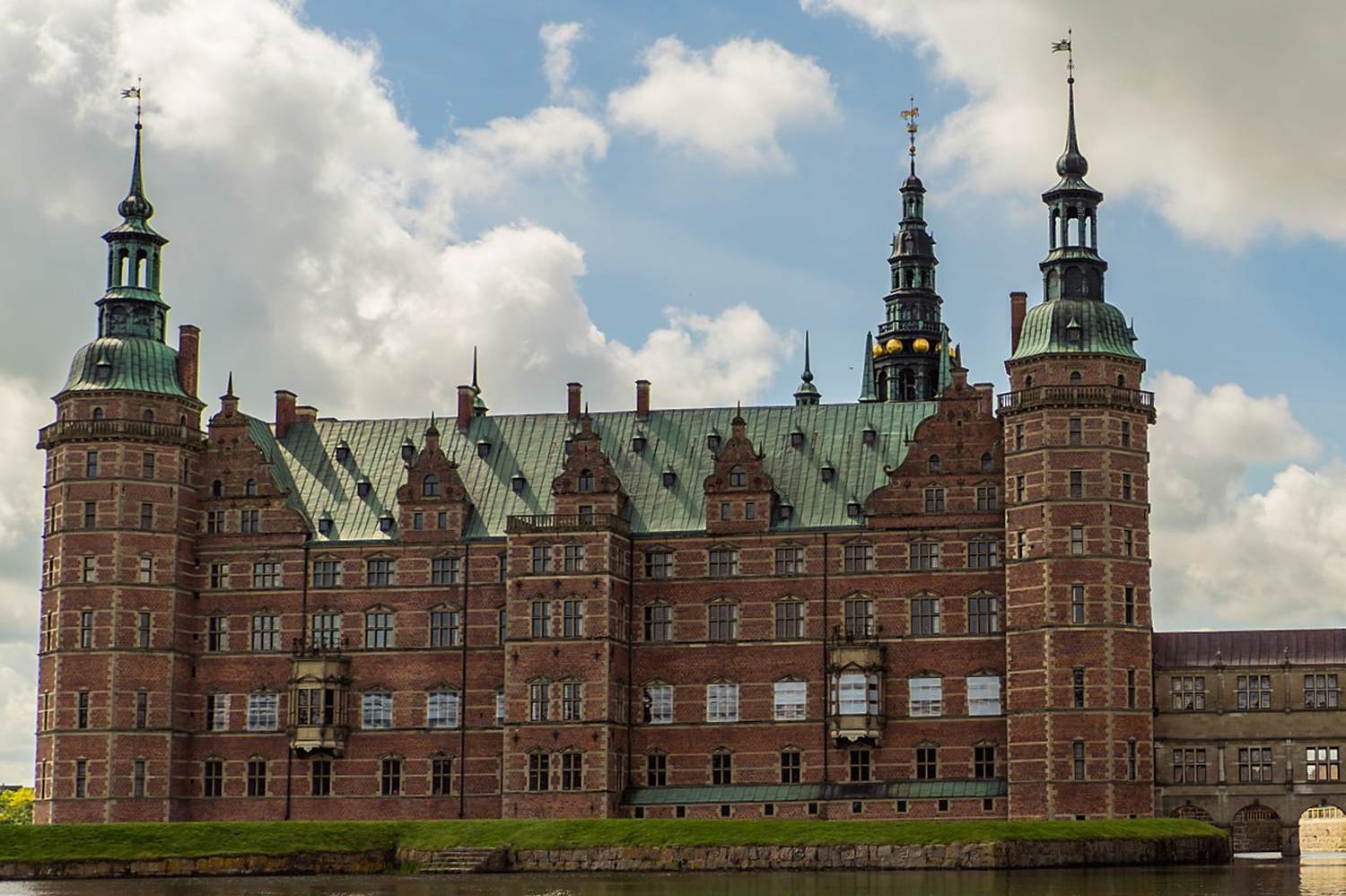
Exterior view
STEENWINCKEL, Hans van, the Younger · 1620 →
- MEDIUM
- Photo
- TYPE
- Other
PALETTE
HOVER OR TAP A SWATCH FOR NAME, SHARE AND HEX. SAMPLED FROM THE IMAGE — INDICATIVE, NOT A PIGMENT ANALYSIS.
DEVELOPMENT BUILD — NOT FOR PUBLIC USE. CONTRIBUTE ON GITHUB.
CURRENT LOCATION · Frederiksborg Castle
03 — ARTWORK
STEENWINCKEL, Hans van, the Younger · 1620 →
PALETTE
HOVER OR TAP A SWATCH FOR NAME, SHARE AND HEX. SAMPLED FROM THE IMAGE — INDICATIVE, NOT A PIGMENT ANALYSIS.
COMMENTARY
UNDERLINED TERMS ARE DEFINED IN THE GLOSSARY.
Built on three islets, in the main castle building the symmetrical requirements of the Renaissance style are broken by the large clock-tower on the chapela small separate place for worship, either part of a large church or a separate building. wing, while the three wings are effectively independent houses superficially merged to form a whole. The castle combines old and new. The exterior is in Netherlandish Renaissance style, red brick buildings with sandstone details, embellished by sweeping gables and imaginative spires. The resulting picturesqueTerm covering a set of attitudes towards landscape, both real and painted, that flourished in the late 18th and early 19th centuries. It indicated an aesthetic approach that found pleasure in roughness and irregularity, and an attempt was made to establish it as a critical category between the 'beautiful' and the 'Sublime'. Picturesque scenes were thus neither serene (like the beautiful) nor awe-inspiring (like the Sublime), but full of variety, curious details, and interesting textures — medieval ruins were quintessentially Picturesque. Natural scenery tended to be judged in terms of how closely it approximated to the paintings of favoured artists such as Gaspard Dughet, and in 1801 the Supplement to Samuel Johnson's Dictionary by George Mason defined 'Picturesque as: 'what pleases the eye; remarkable for singularity; striking the imagination with the force of painting; to be expressed in painting; affording a good subject for a landscape; proper to take a landscape from.' The Picturesque Tour in search of suitable subjects was a feature of English landscape painting of the period, exemplified, for example, in the work of Girtin and (early in his career) of Turner, and the Picturesque generated a large literary output; much of it was pedantic and obsessive and it became a popular subject for satire. quality was evidently more important than the rigorous requirements of symmetry. Moreover, of greatest importance for the builder was the lavish sculptural decoration, which glorifies Christian IV as the leading Protestant prince through themes from astrology and ancient mythology and ancient Roman and Danish history. This triumphal process culminates in the chapel, the entire decoration of which can be seen as a demonstration of the King's theocratic princely ideal.
The photo shows the façadethe front or principal face of a building, especially one elaborately constructed; a blind façade is a façade that is purely decorative and does not relate to the structure of the building. of the Royal Wing.
@online{wga-r76cceeb7a5b575,
  author       = {Krén, Emil and Marx, Daniel},
  title        = {Exterior view by STEENWINCKEL, Hans van, the Younger},
  organization = {{Web Gallery of Art}},
  date         = {2026-09-13},
  url          = {https://beta.wga.hu/artists/steenwinckel-hans-van-the-younger-r9242568ccb7687/exterior-view-r76cceeb7a5b575},
  urldate      = {2026-09-13},
  langid       = {english}
}
ACCESSED 2026-09-13. REPLACE THE AUTHOR FIELD WITH THE COMMENTARY AUTHOR WHERE ONE IS NAMED.


