03 — ARTWORK
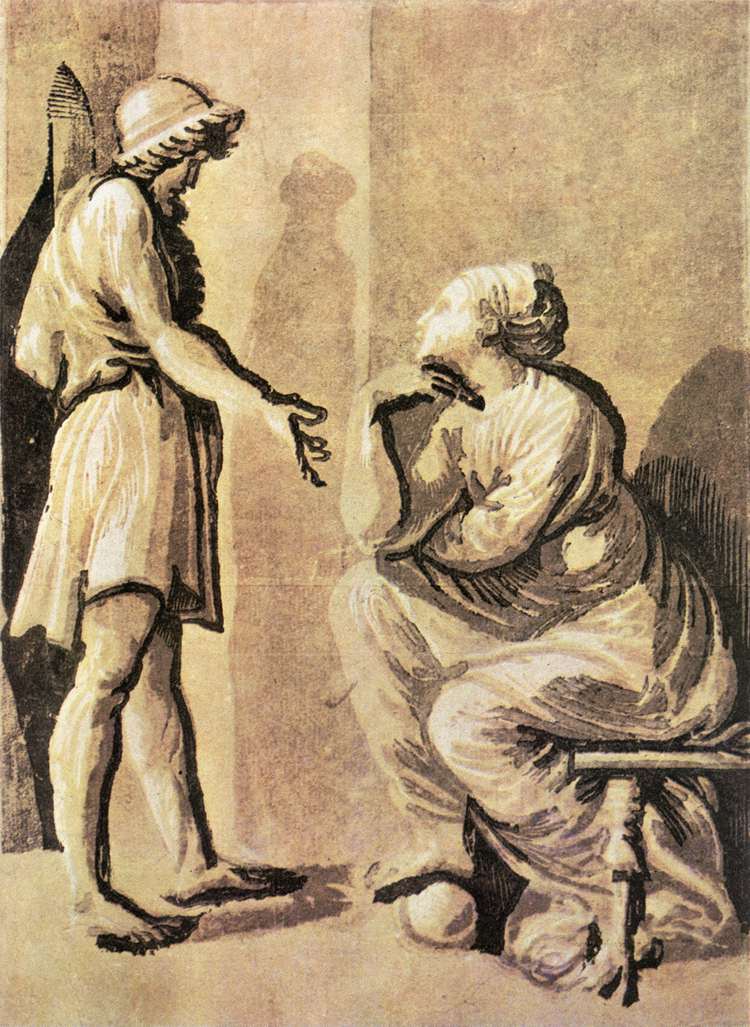
Hero and Sibyl
- MEDIUM
- Chiaroscuro woodcut, 292 x 213 mm
- TYPE
- Mythological
PALETTE
HOVER OR TAP A SWATCH FOR NAME, SHARE AND HEX. SAMPLED FROM THE IMAGE — INDICATIVE, NOT A PIGMENT ANALYSIS.
DEVELOPMENT BUILD — NOT FOR PUBLIC USE. CONTRIBUTE ON GITHUB.
03 — ARTWORK
PALETTE
HOVER OR TAP A SWATCH FOR NAME, SHARE AND HEX. SAMPLED FROM THE IMAGE — INDICATIVE, NOT A PIGMENT ANALYSIS.
COMMENTARY
UNDERLINED TERMS ARE DEFINED IN THE GLOSSARY.
The chiaroscuroIn painting, the modelling of form (the creation of a sense of three-dimensionality in objects) through the use of light and shade. The introduction of oil paints in the 15th century, replacing tempera, encouraged the development of chiaroscuro, for oil paint allowed a far greater range and control of tone. The term chiaroscuro is used in particular for the dramatic contrasts of light and dark introduced by Caravaggio. When the contrast of light and dark is strong, chiaroscuro becomes an important element of composition. prints were produced from several wood blocks in which the major areas were printed in black and successive blocks were carefully registered to yield highlights and additional areas of colour. These were the first true colour prints, for hand tinting done directly, and often crudely, on the black-and-white impression was thus eliminated. Here the larger format and the addition of colour offer a better opportunity to appraise the character and qualities of this type of colour woodcutA print made from a wood block. The design is drawn on a smooth block of wood and then cut out, leaving the design standing up in relief the design to be printed. The person who carved the woodcut often worked to a design by another artist.. The finest examples of works produced by this method are generally conceded to be by Italian artists, and these prints are probably the first to be created specifically as wall decorations. Detail is reduced to a minimum and stress is placed on bold composition, large contours, and flat, subtly coloured areas.
Ugo da Carpi is a somewhat controversial figure. The dates of his birth and death are not generally agreed upon. Vasari mentions him as a "mediocre painter," but nevertheless "in other flights of fancy, of the keenest geniusin classical Rome, a person's invisible tutelary god. In art from the classical period onwards, the low-ranking god was depicted as a winged, usually childish figure.." His chiaroscuro prints should be considered the products of these "flights of fancy." He worked in both Venice and Rome, and in the former city he probably first learned the art of woodcutting and the special technique of the chiaroscuro print. During his sojourn in Rome, many of his works were inspired by the art of Raphael, whose drawings he translated into this new medium. These sold so well that they were counterfeited by some Venetian artisans, and Ugo returned to Venice to present a petition to the Senate for a special license to protect him against this piracy.
Attributions in this medium are not readily made. The illustration of the present example in the scholarly catalogue of William H. Schab carries a question mark after the artist's name. It is, however, a splendid work and definitely in the master's style. It is sometimes referred by its older title, Raphael and His Mistress. However, most likely the subject is taken from classicalRelating to the culture of ancient Greece and Rome (classical Antiquity). The classical world played a profoundly important role in the Renaissance, with Italian scholars, writers, and artists seeing their own period as the rebirth (the "renaissance") of classical values after the Middle Ages. The classical world was considered the golden age for the arts, literature, philosophy, and politics. Concepts of the classical, however, changed greatly from one period to the next. Roman literature provided the starting point in the 14th century, scholars patiently finding, editing and translating a wide range of texts. In the 15th century Greek literature, philosophy and art - together with the close study of the remains of Roman buildings and sculptures-expanded the concept of the classical and ensured it remained a vital source of ideas and inspiration. mythology and represents a hero consulting an oracle or sibyl.
The subject is printed from four blocks, one in black, one in gray, and two in shades of ocher.
@online{wga-r619063ba541f43,
  author       = {Krén, Emil and Marx, Daniel},
  title        = {Hero and Sibyl by UGO DA CARPI},
  organization = {{Web Gallery of Art}},
  date         = {2026-09-13},
  url          = {https://beta.wga.hu/artists/ugo-da-carpi-rc3a74e161ddf20/hero-and-sibyl-r619063ba541f43},
  urldate      = {2026-09-13},
  langid       = {english}
}
ACCESSED 2026-09-13. REPLACE THE AUTHOR FIELD WITH THE COMMENTARY AUTHOR WHERE ONE IS NAMED.
The archive catalogues no further works by this artist.
TRY SAME COLLECTION →
