03 — ARTWORK
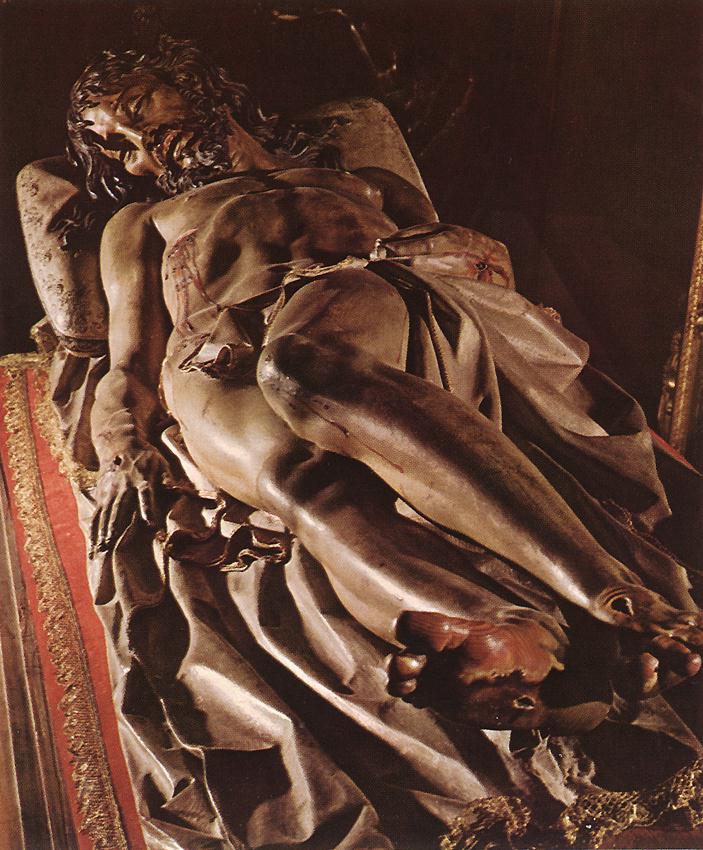
The Dead Christ
- MEDIUM
- Polychromed wood
- TYPE
- Religious
PALETTE
HOVER OR TAP A SWATCH FOR NAME, SHARE AND HEX. SAMPLED FROM THE IMAGE — INDICATIVE, NOT A PIGMENT ANALYSIS.
DEVELOPMENT BUILD — NOT FOR PUBLIC USE. CONTRIBUTE ON GITHUB.
03 — ARTWORK
PALETTE
HOVER OR TAP A SWATCH FOR NAME, SHARE AND HEX. SAMPLED FROM THE IMAGE — INDICATIVE, NOT A PIGMENT ANALYSIS.
COMMENTARY
UNDERLINED TERMS ARE DEFINED IN THE GLOSSARY.
The theme of the dead Christ, crucified or gisantFrench term used from the 15th century onwards for a lying or recumbent effigy on a funerary monument. The gisant typically represented a person in death (sometimes decomposition) and the gisant position was contrasted with the orant, which represented the person as if alive in a kneeling or praying position. In Renaissance monuments gisants often formed part of the lower register, where the deceased person was represented as a corpse, while on the upper part he was represented orant as if alive., was treated frequently by Fernandez. After the 16th century the scene was reduced to the representation of Christ alone, without the traditional mourners. Here, anecdote is suppressed; this is the Christ of Sorrows, stiffened in the rigor of death - the extreme expression of realismRealism (with an upper case "R"), also known as the Realist school, denotes a mid-nineteenth century art movement and style in which artists discarded the formulas of Neoclassicism and the theatrical drama of Romanticism to paint familiar scenes and events as they actually looked. Typically it involved some sort of sociopolitical or moral message, in the depiction of ugly or commonplace subjects. One of the main representatives and spokesmen was the painter Gustave Courbet. In the dispute about ways to represent reality, Realism rebelled against the idealistic and classicist tendencies in painting. in sculpture. The bone structure is insistently marked, the eyes hollow, the cheeks sunken. The very realistic polychromy accentuates the physical aspect of the PassionThe events leading up to Good Friday, beginning with Christ's arrest and ending with his burial. Portrayals of the Passion, which focus on the Suffering Christ, include depictions of Judas betraying Christ with a kiss, Peter cutting off Malchus's ear, the crown of thorns, and so on.; streams of coagulated blood run down the cheeks and disappear into the beard. Such conceptions emphasize the function of image that 17th-century Spanish sculpture served.
@online{wga-rbd44367bc2e30e,
  author       = {Krén, Emil and Marx, Daniel},
  title        = {The Dead Christ by FERNÁNDEZ, Gregorio},
  organization = {{Web Gallery of Art}},
  date         = {2026-09-12},
  url          = {https://beta.wga.hu/artists/fernndez-gregorio-r83a29c7f732b54/the-dead-christ-rbd44367bc2e30e},
  urldate      = {2026-09-12},
  langid       = {english}
}
ACCESSED 2026-09-12. REPLACE THE AUTHOR FIELD WITH THE COMMENTARY AUTHOR WHERE ONE IS NAMED.


